
How The Toad Hideout got its name
My wife and I were sitting in the front room one evening, talking about what sort of cabin we could build in the woods. We like everything here to have a reason for being here. Our camping pitches and tree tents are named after animals you find in the woodland, and our toilet block is based on a train carriage because it sits on the old railway track. So we started talking about the things we’d seen in the woods that had really stuck with us.
Every few years, something happens here that still amazes us. By our reckoning it’s about every four years. Thousands of tiny toads come through the woodland. We don’t know where they come from, but they’re everywhere. You walk down the path and the ground seems to move as they all spread out in front of your feet. So there we were in the front room thinking, why don’t we base the cabin on a toad?
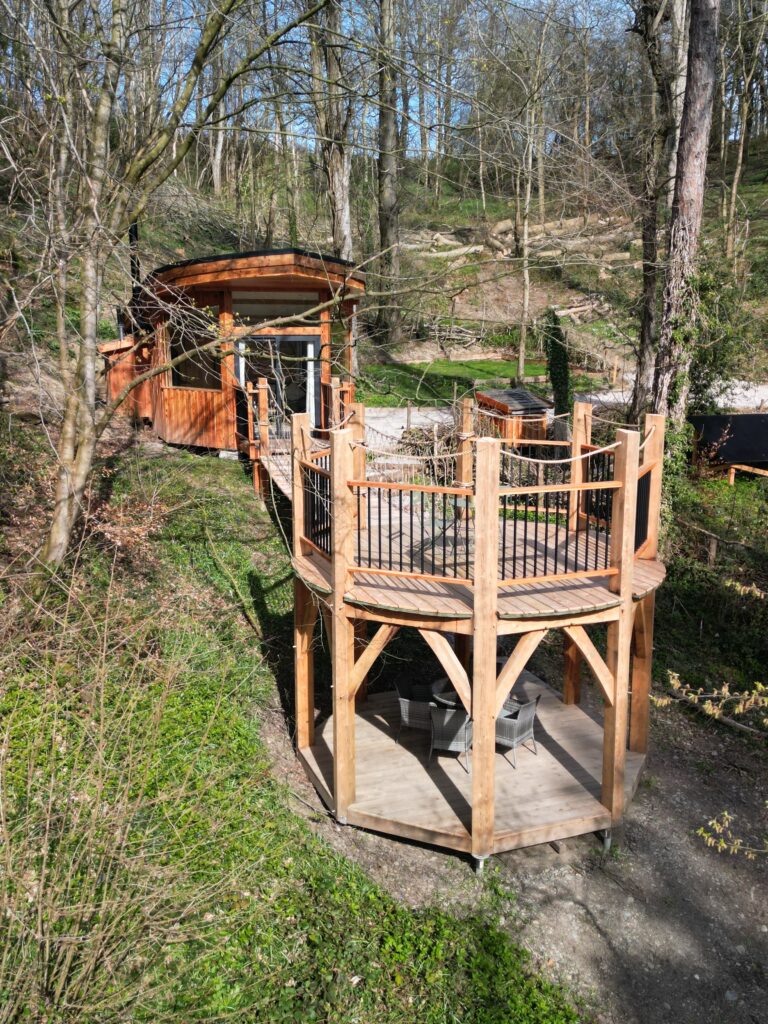
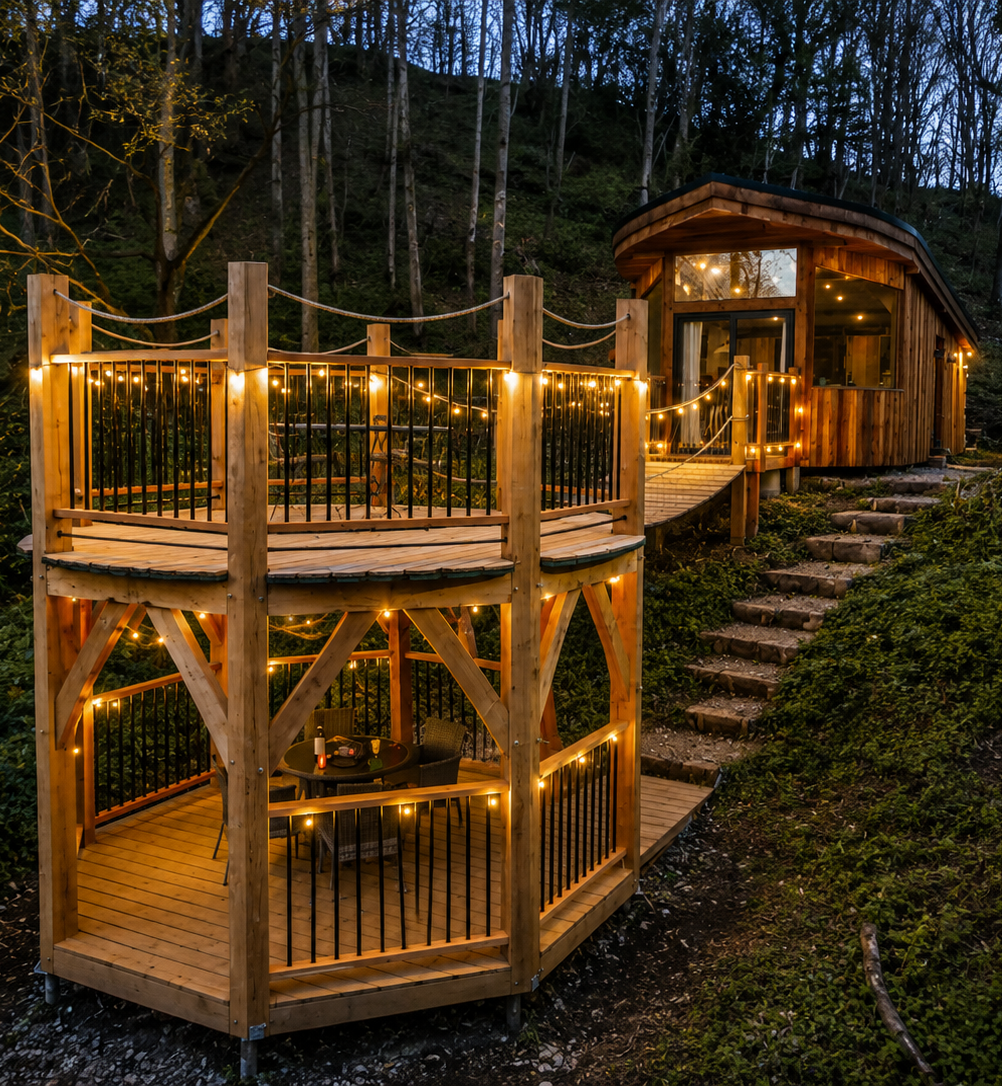
The rope bridge could be the tongue, reaching out to a lily pad. At first, we pictured a single raised deck. Then I saw a two-level deck online and thought, that’s it. We could sit underneath as well as up top. The upper deck is a sitting area at the moment, and we’d love to use it for cooking and barbecuing too.
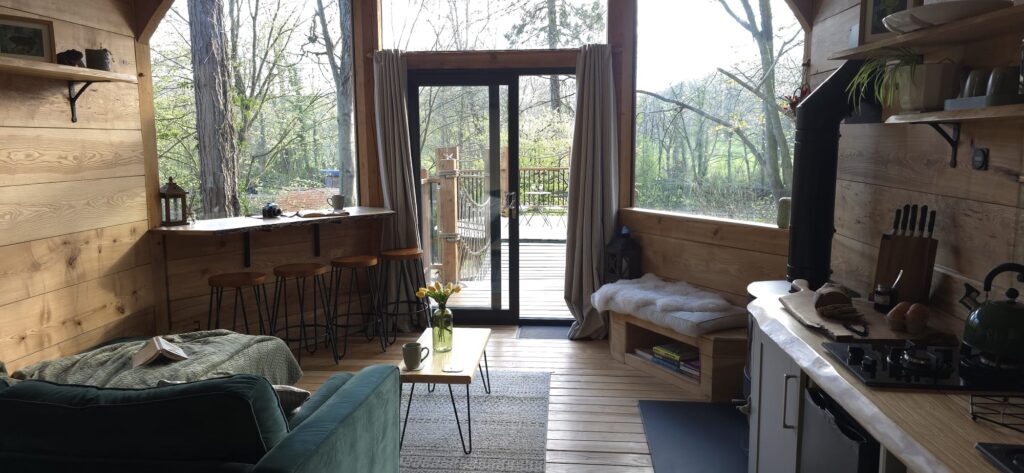
My wife wanted round windows for the eyes. I wasn’t sold on the round windows. We ended up angling the front of the cabin and putting a big, wide window on either side. Those became the eyes. We glazed the front and the section above it, too. When you’re inside looking out, the woods fill your view, right up into the trees.
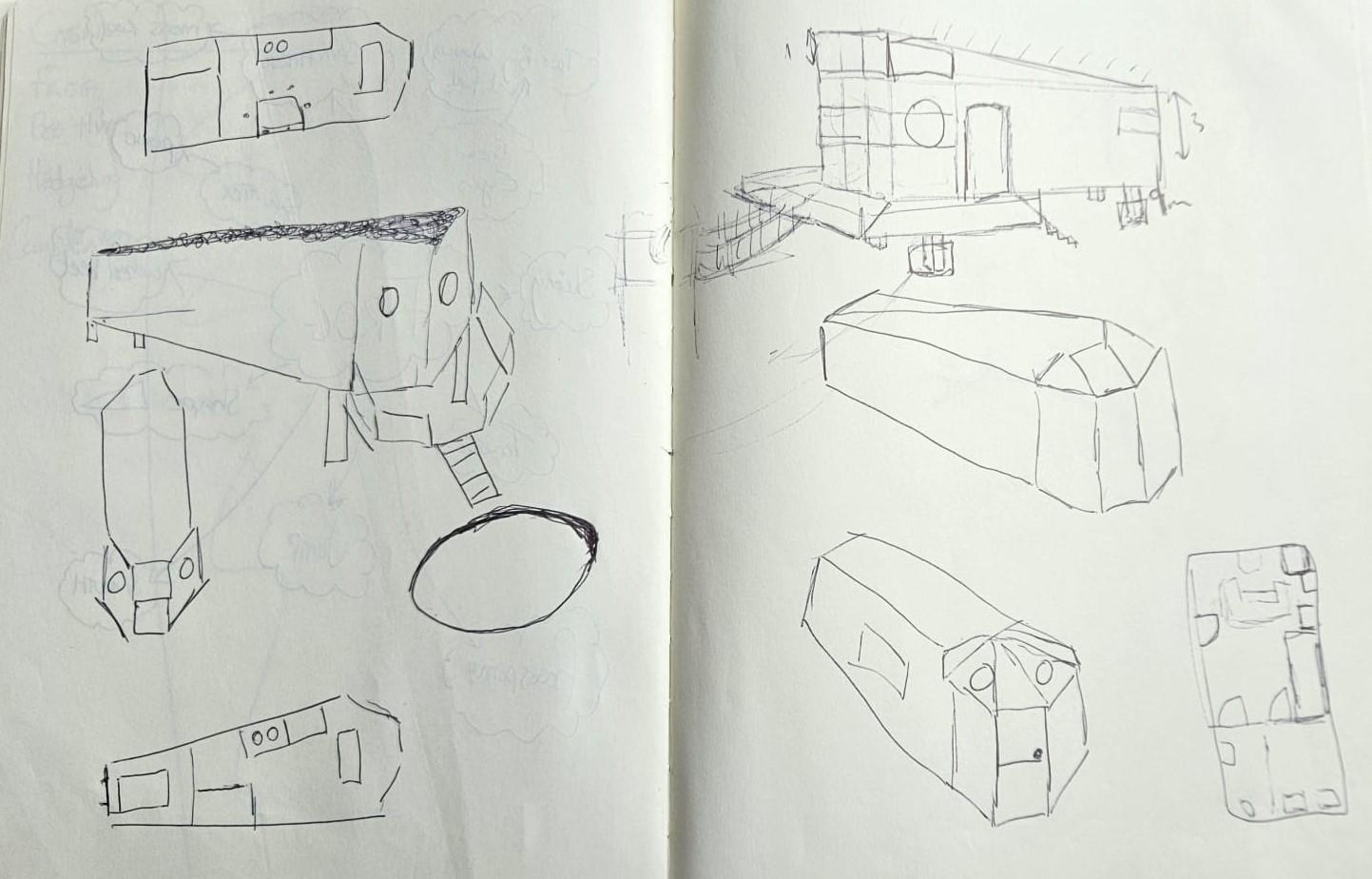
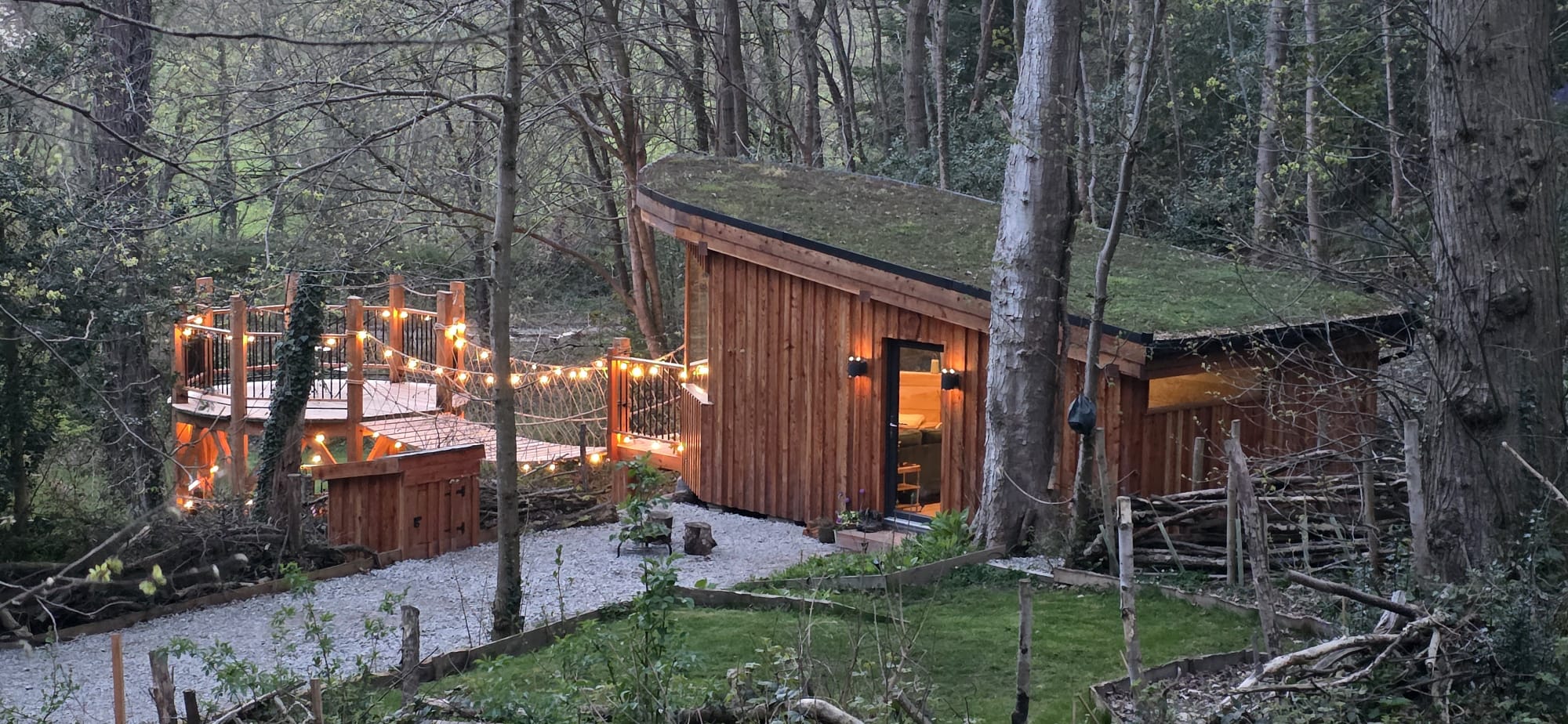
The roof slopes down at the back, like a toad settling down. We used an EPDM rubber membrane to keep the rain out and put a living roof over it so the cabin would blend into the woods. My favourite way to see it is coming down the track from what we call the third level. That’s where you get the green of the roof and the timber cladding from our own woodland together. I still think back to us sitting in the front room, chatting about toads and drawing out what the cabin could be.
When we first arrived at Tree Tops and Train Tracks, a nearby farmer came over and offered us what seemed like an enormous sum of money for the larch trees behind our house. He’d clear-fell them, take the timber away and pay us for it. I realised very quickly that those trees were worth something. And I started to think that if we could use that timber ourselves, we might have a way to build a lot of what we’d imagined for Tree Tops and Train Tracks.
I started ringing around contractors to see who could help us get some of the bigger larch out. At that point we didn’t have the machinery or the know-how to do it ourselves. My friend Adam, who’s local and whose kids go to the same school as ours, came over to fell some of the trees nearest the house. They were a bit scary when the wind got up. While he was there, I asked him, “Can you teach me?” He showed me how to fell trees, how to tie the knots and how to pull them over. I’m still grateful he took the time. It’s something I can do myself now.
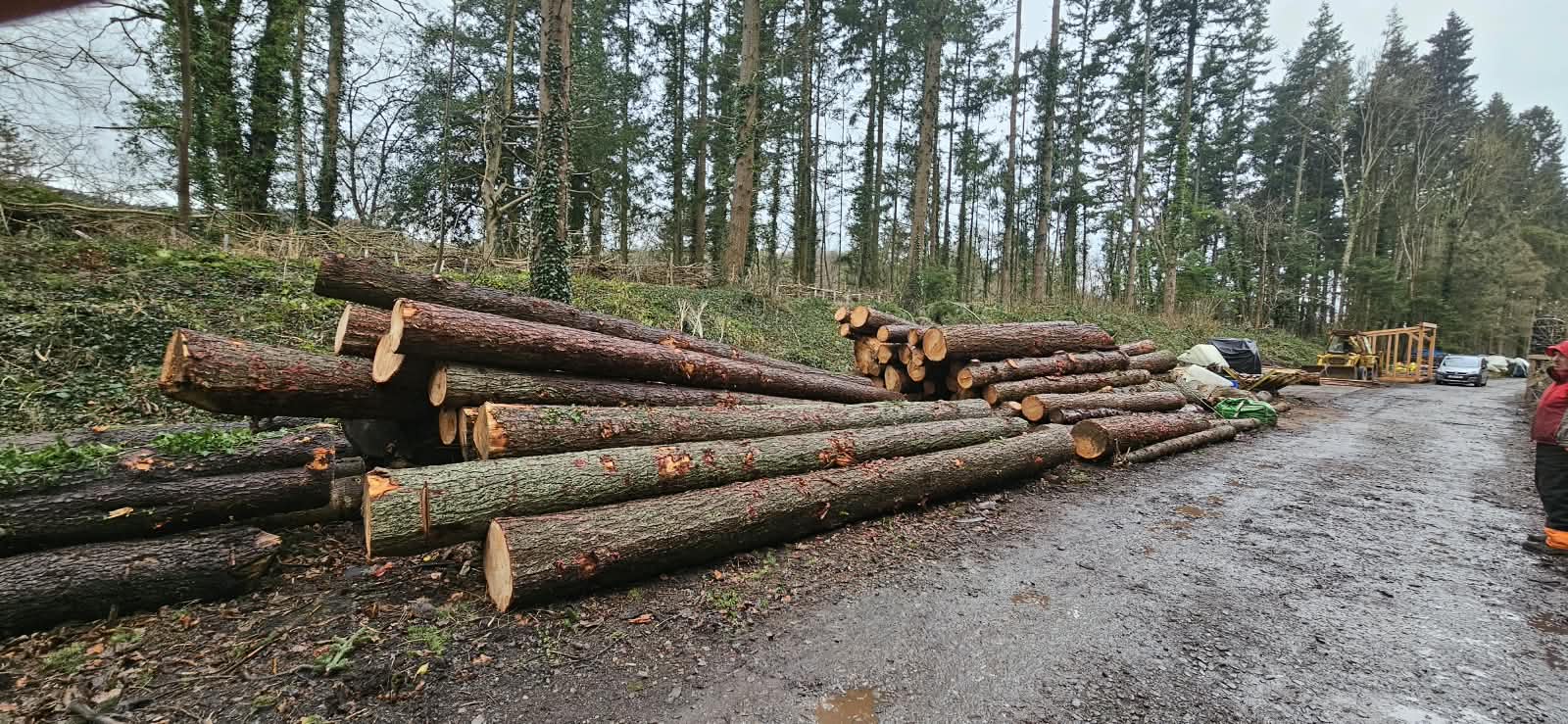
Getting the logs out of the woodland and up to the mill was another job altogether. We brought in machinery and contractors to help with that, but we were also lucky that someone had left a JCB on the land. I managed to get it going, and with help from Aled, who’s now my full-time mechanic, we can use the backhoe to pick up a log and load it straight onto the mill. That old JCB has made life a lot easier.
The Woodland Mills 130 Max has become the backbone of the business. If I need a six-by-six beam, I can pick up a log, put it on the mill and, half an hour or so later, I’ve got the beam I need. I still think that’s brilliant. There’s been a lot of learning along the way. The people at Woodland Mills and in the milling groups have been generous with their help, and I’ve lost count of the things I’ve learnt from YouTube.
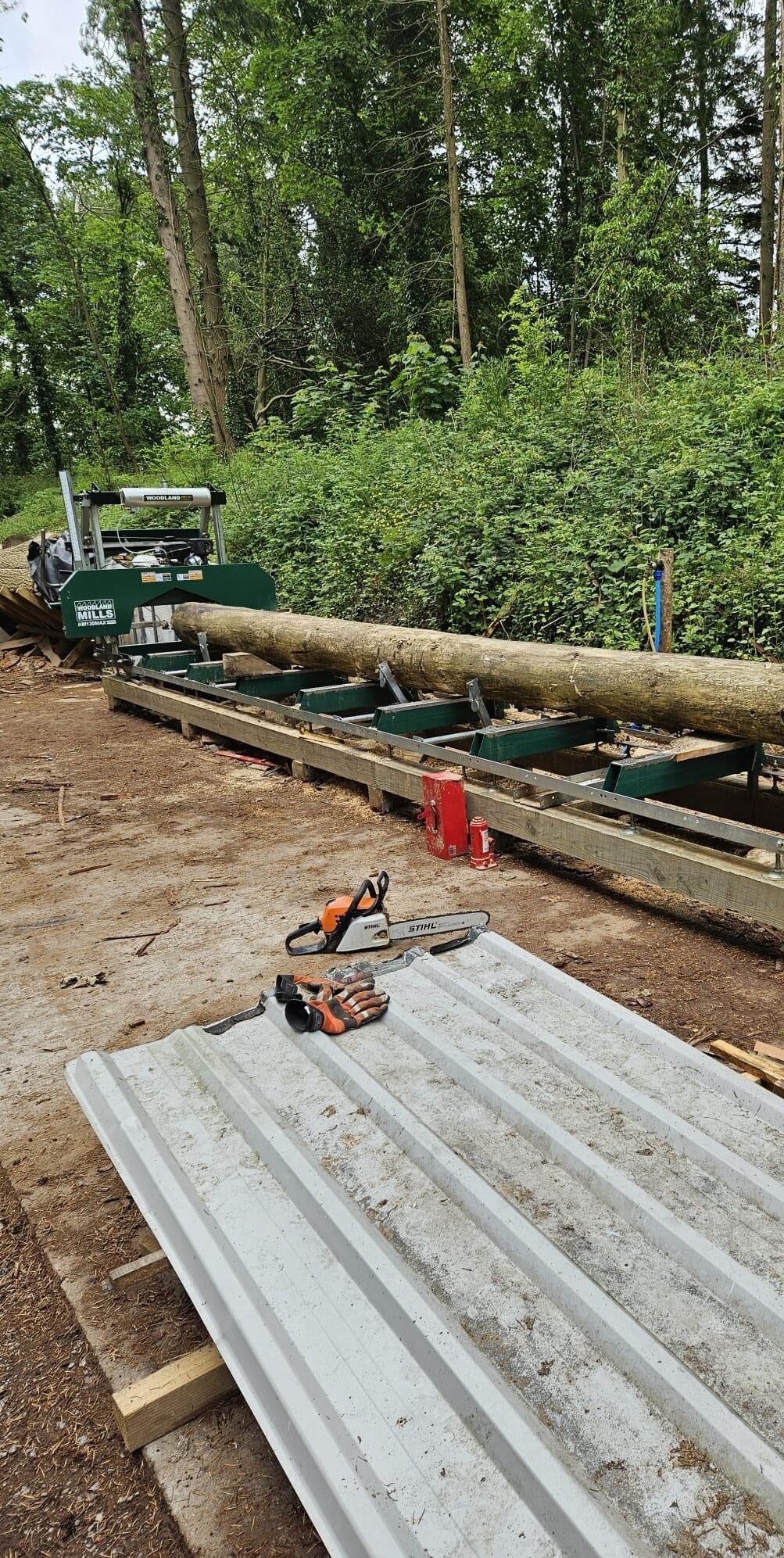
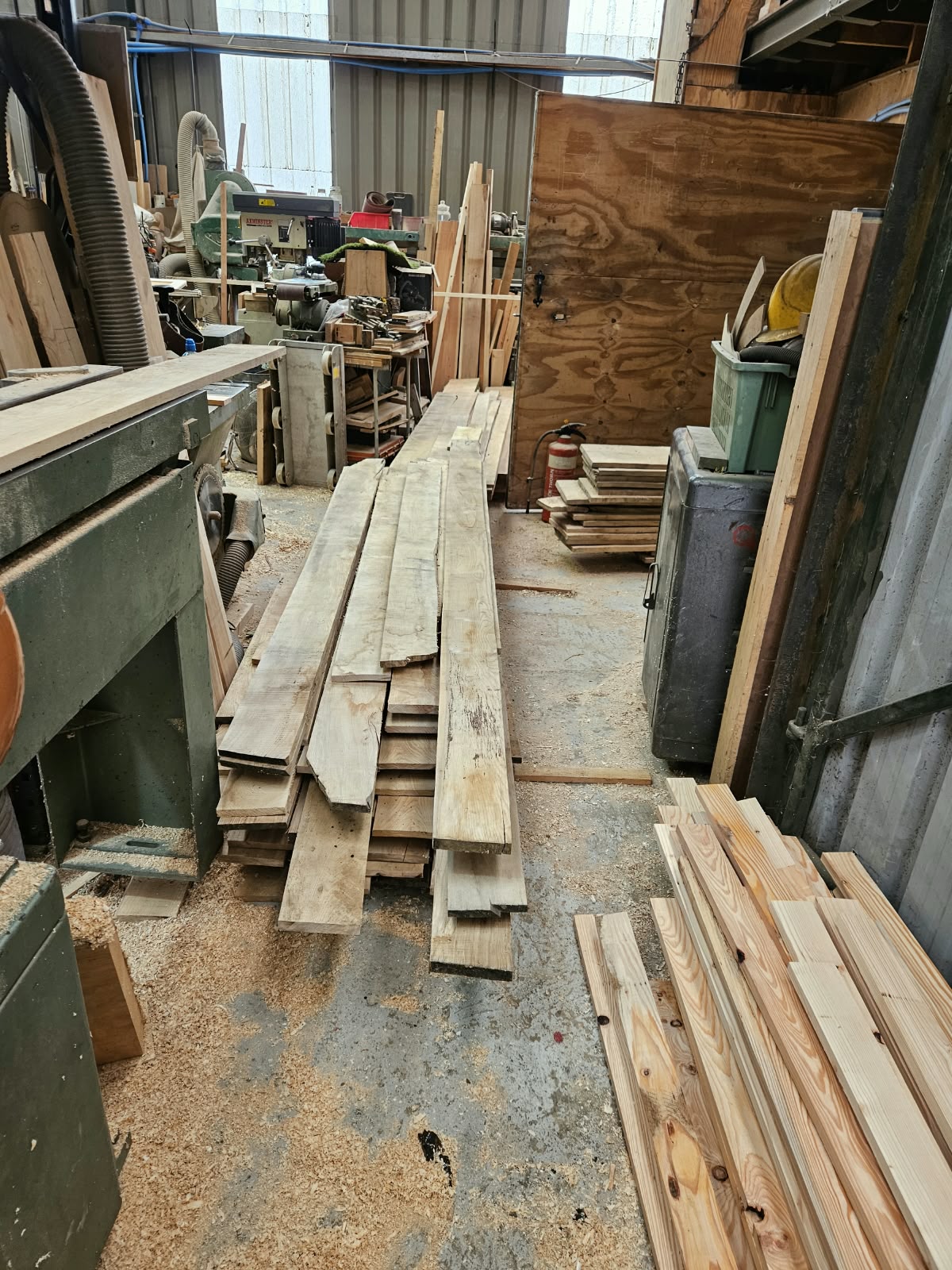
My favourite bit is cutting into a log and seeing the grain for the first time. And the smell of freshly cut larch gets me every time. It’s like cutting grass. I love it. Being able to look after the woodland and use some of the timber it produces feels like a real privilege. Every time I see the larch cladding on The Toad Hideout, I think about where it came from and how much we learnt getting it there.
I met Joe and Fred Farey when I went on one of their timber-framing courses. We had so many frames we wanted to build at Tree Tops and Train Tracks that I asked if they’d come and run a course at ours. They said yes, and we’ve been running courses in our woodland every year since.
That’s helped us get on with so many of the things we wanted to build here. Once the frame is up, you’ve got the main structure to work from. There’s still the cladding and all the finishing touches, which is a big job in itself, but you can finally stand inside it and see what you’re making.
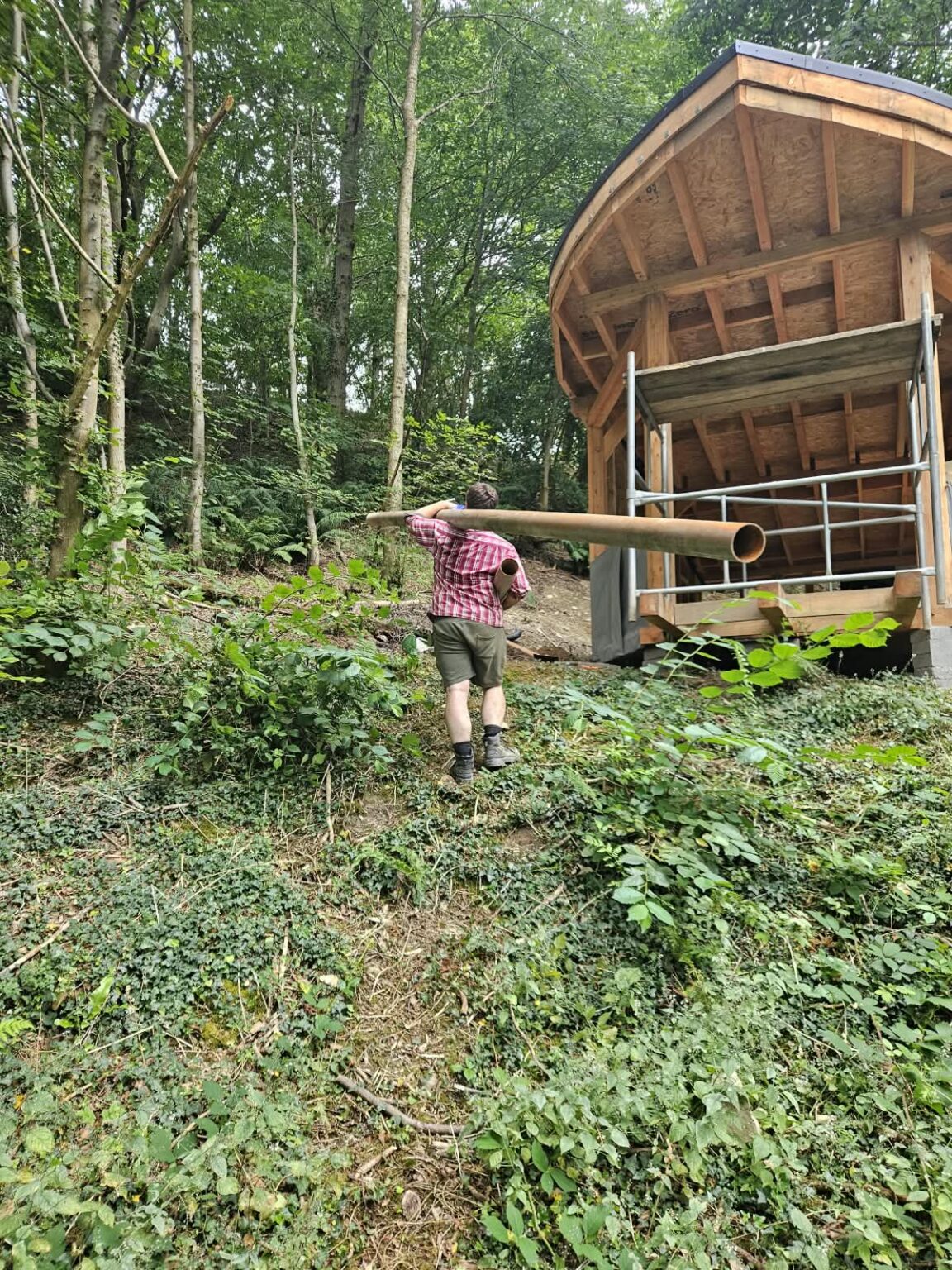
When it was time to build The Toad Hideout, we gave ourselves a fairly complicated frame to make. The front was angled, the building got taller from back to front, and there was a suspended balcony to work into it as well. I built it with seven other people on the course, and it was great fun. We worked underneath the very first timber-framed building we’d made on a course with Joe and Fred. I was grateful we’d built that one first. It gave us somewhere to work under cover while we made the next one.
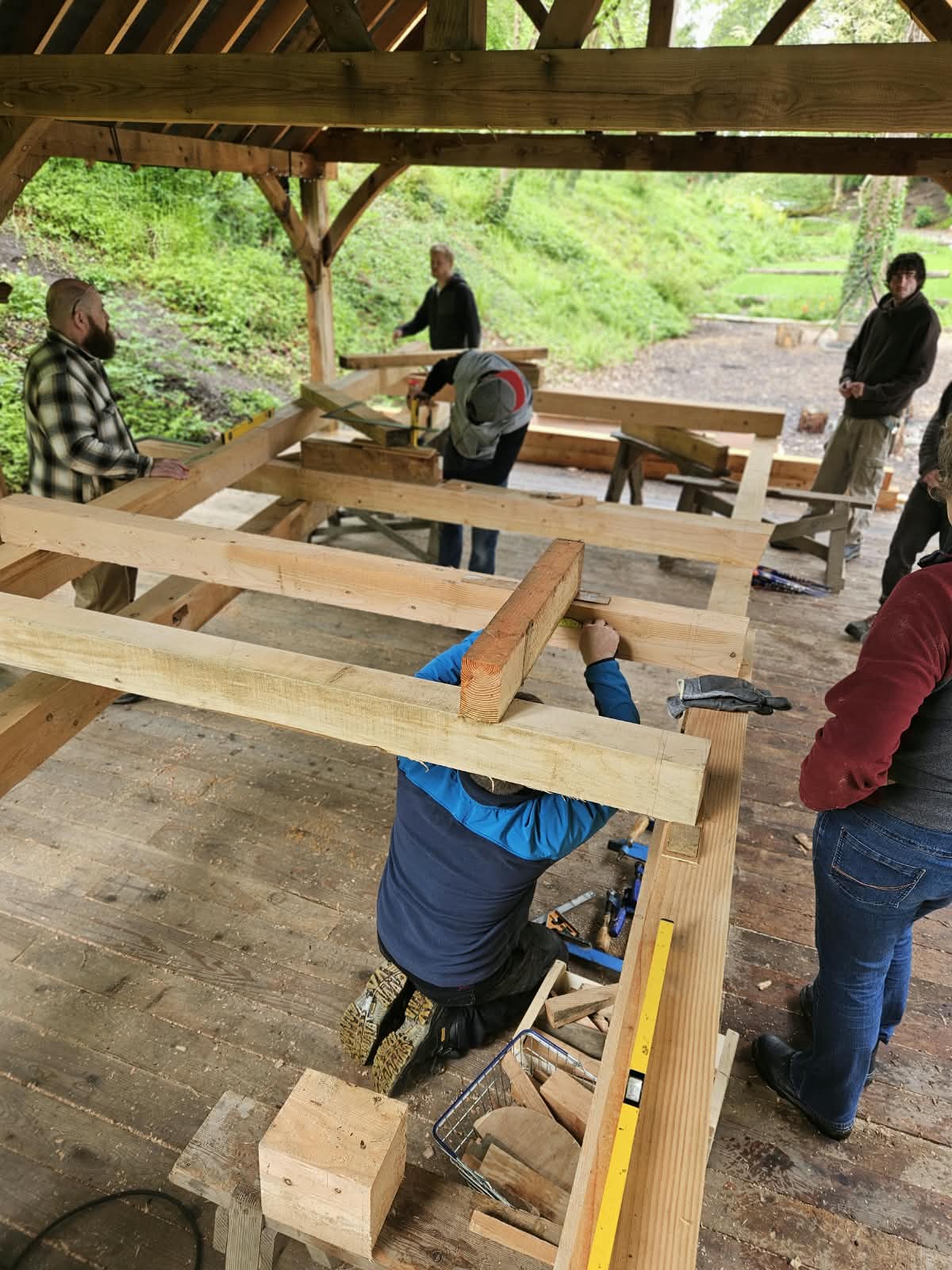
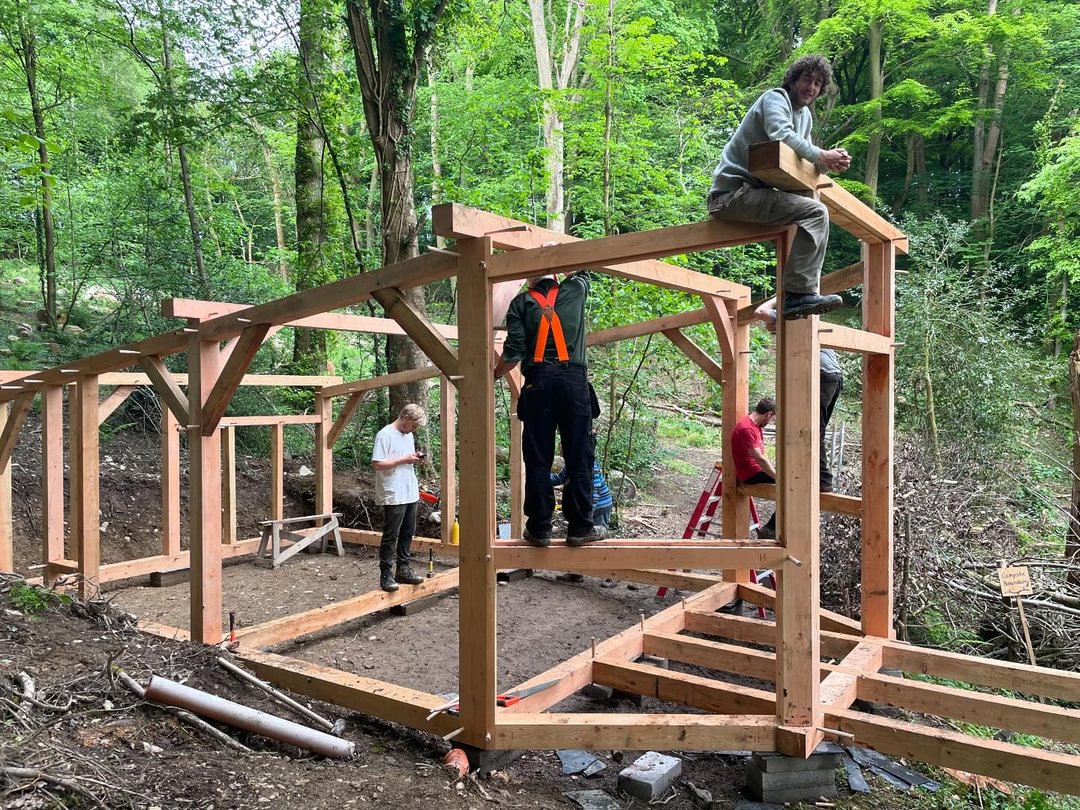
Joe and Fred take you through the whole thing, from laying out the timbers to raising the frame, using traditional techniques. It’s a wonderful way to spend a week in the woods. In May 2024 we raised the frame for the cabin, and as soon as we could afterwards, we got on with turning it into The Toad Hideout.
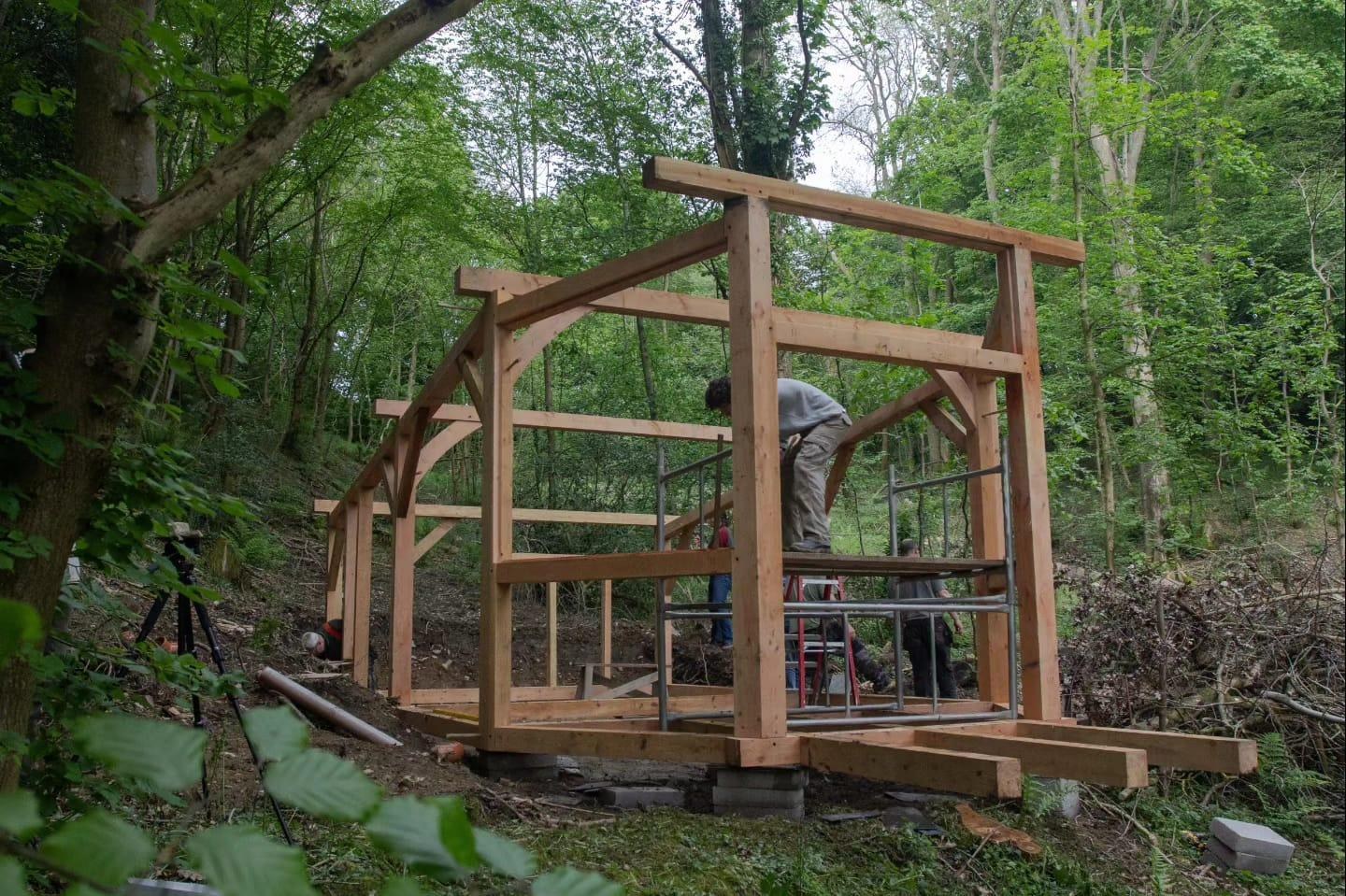
If you fancy spending a week in the woods making a frame with us, you can see the upcoming timber-framing courses and book a place.
Working Wednesdays and Uncle Al
Alan first came along to one of our Working Wednesdays. We had a group of volunteers who’d come and help us with whatever needed doing. They planted trees, built decking and benches, and even built the road into the campsite. I’d fill them up with eggs and bacon at lunchtime, and we’d sit there chatting and laughing. People loved coming, and I loved having them there. Alan said he’d been spending a lot of time on his own since his wife died and asked if he could come more often. I bit his hand off. He’s been part of the family ever since. The kids call him Uncle Al and they absolutely love him to bits. He’s hilarious, and he’s one of those people you want around when a job starts getting the better of you. I’ll be trying to work out how to straighten a bit of cladding that’s warped, and Alan will come up with something ridiculously clever. The moment he says it, it sounds like common sense. It just hadn’t occurred to me because I was under pressure. He has a way of putting me at ease. Even when I’m felling one of the bigger trees, he’ll be there in the background, keeping an eye on me and making sure I don’t do anything daft. He’s done so much for this place, and he’s been great company while we’ve been doing it.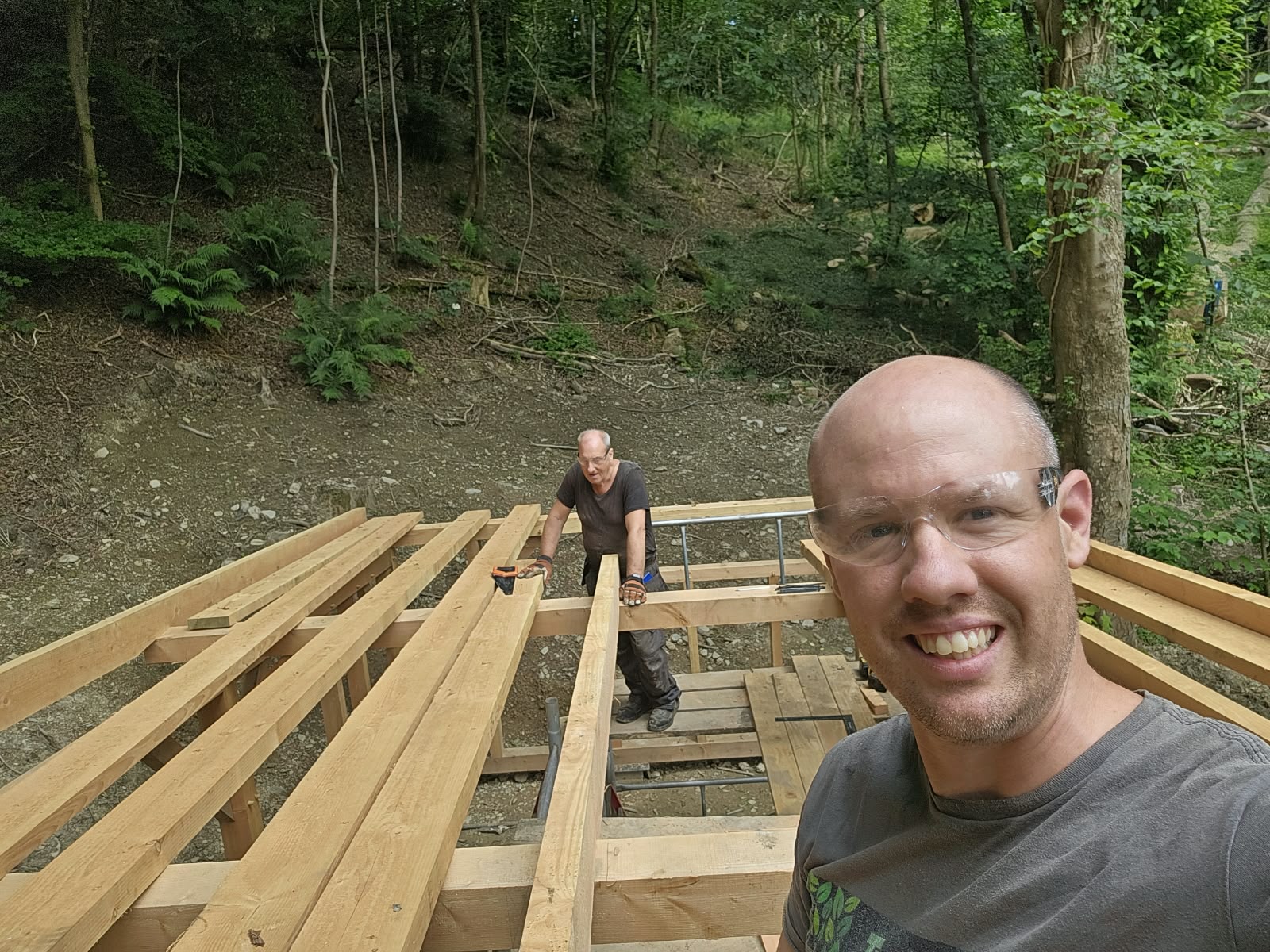
Alan and I worked on the roof together. The cabin gets taller towards the front, and with the front angled as well, we had some awkward compound mitre joints to work out. Then there was the piece of timber we had to bend into shape. That’s where my friend Si came in.
The first time I turned up at Si’s, I wanted to get a blade sharpened. He thought I was the taxman. He nearly wet himself. We’ve got on ever since, and I’ve spent time in his workshop picking up all sorts of timber-framing techniques from him.
For the roof, Si suggested making a series of cuts partway through the timber. That gave it enough flex to bend into shape so we could screw it into place. I love learning things like that from people who’ve spent years working with wood. And when I look at the roof now, I think about being up there with Alan and about the bloke who thought I’d come to do his taxes.
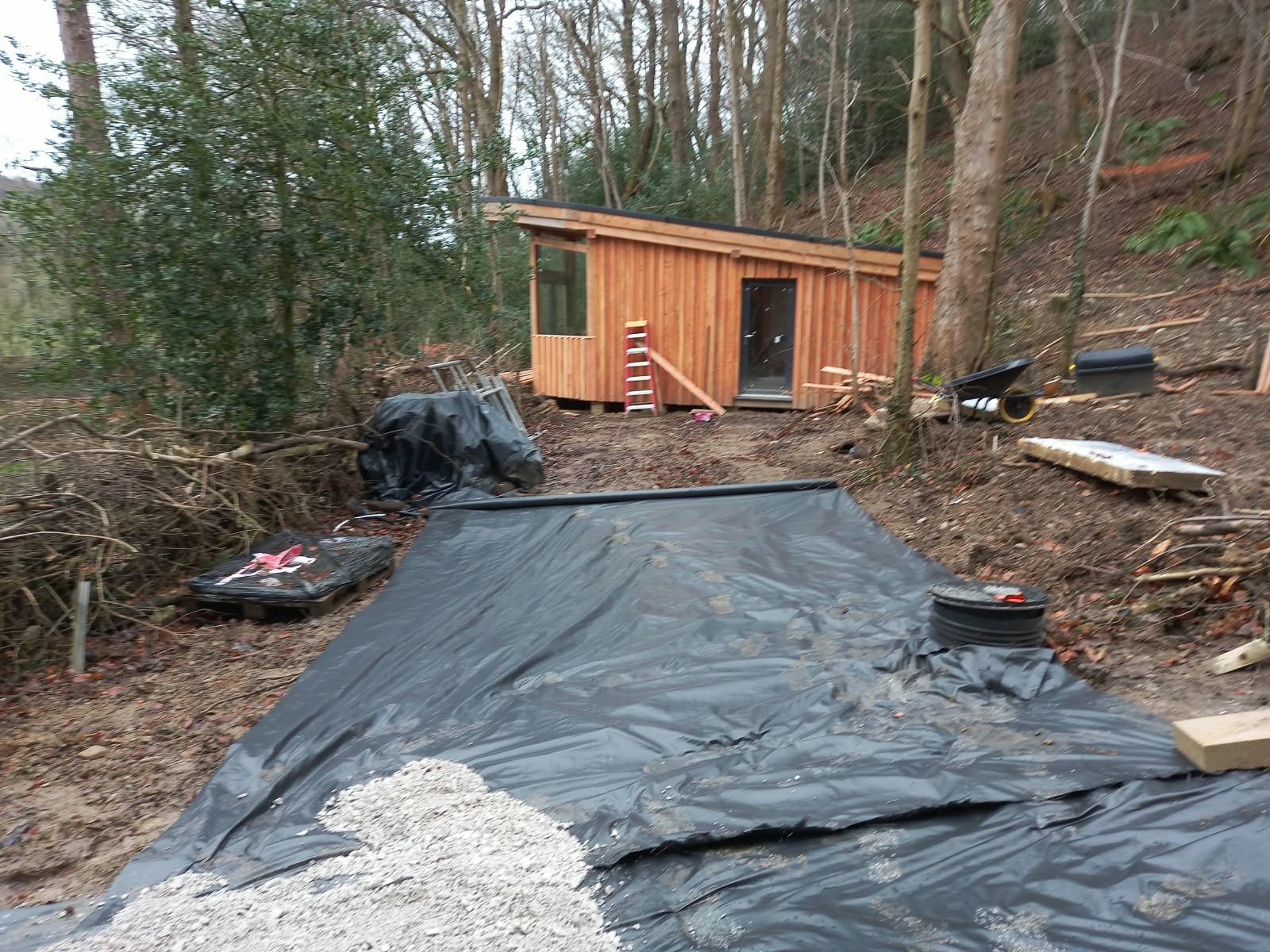
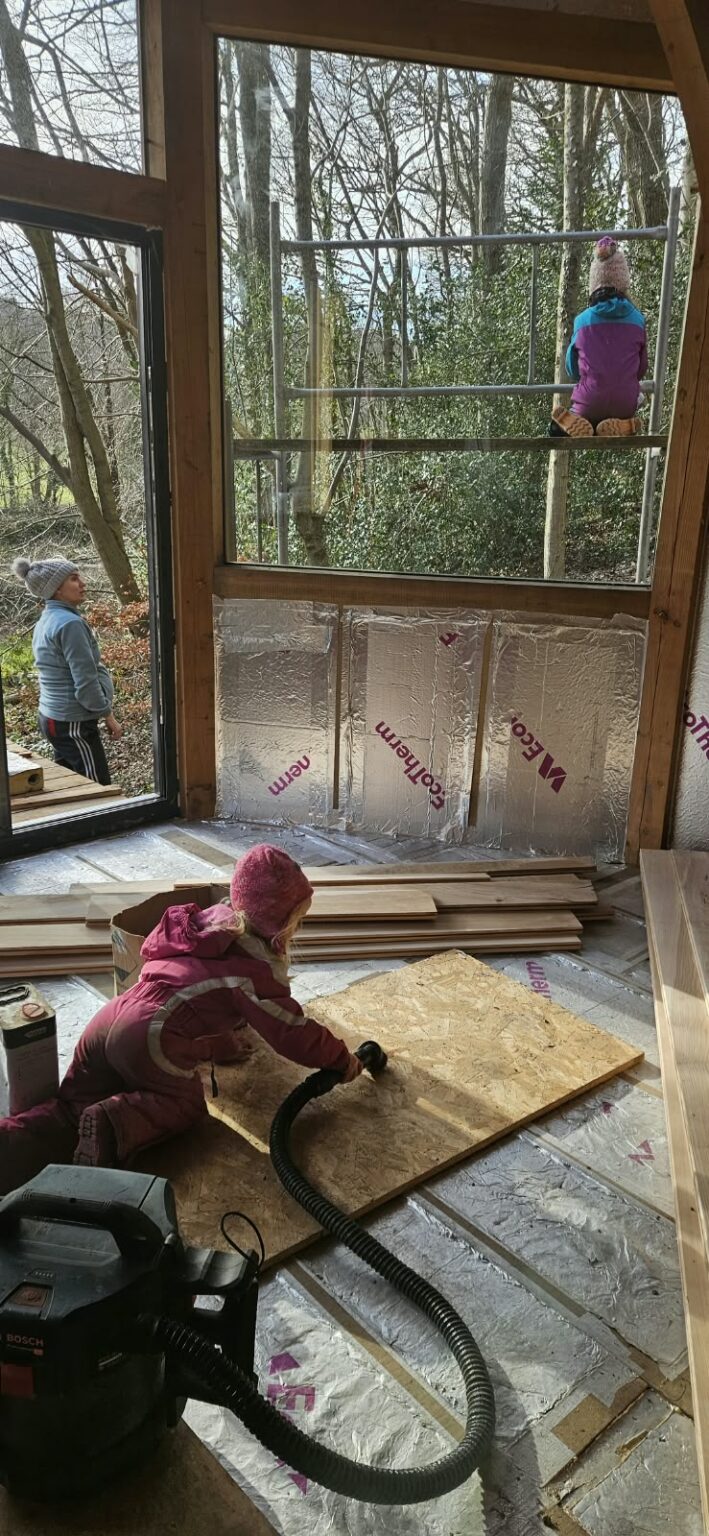
By the time we were finishing the cladding, we were trying to get the cabin open and there still seemed to be jobs everywhere. Paddy came over at the last minute to give me a hand. I was so glad he came. My wife was pregnant at the time and there she was, up a ladder finishing off the painting so we could get it done in time.
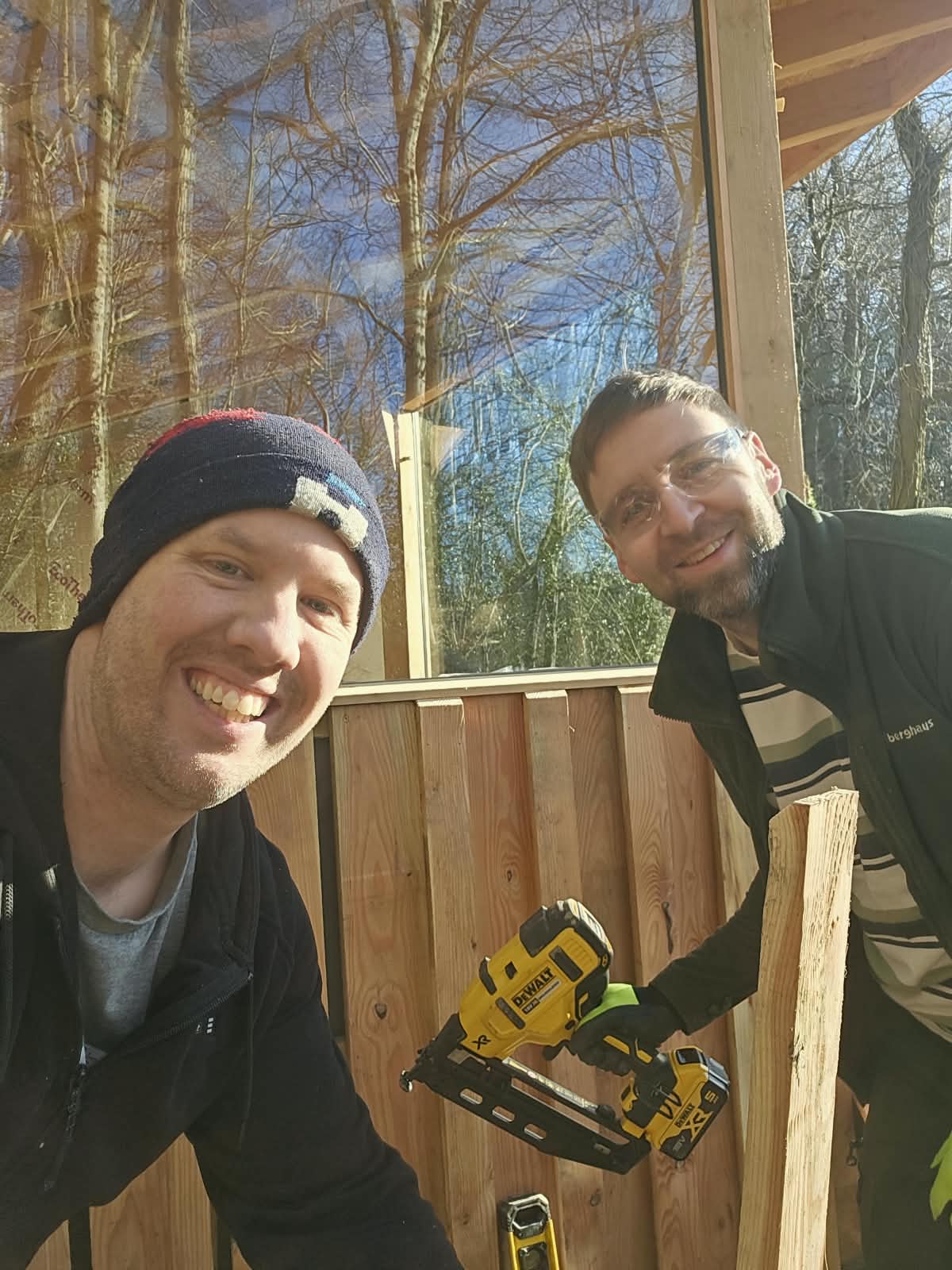
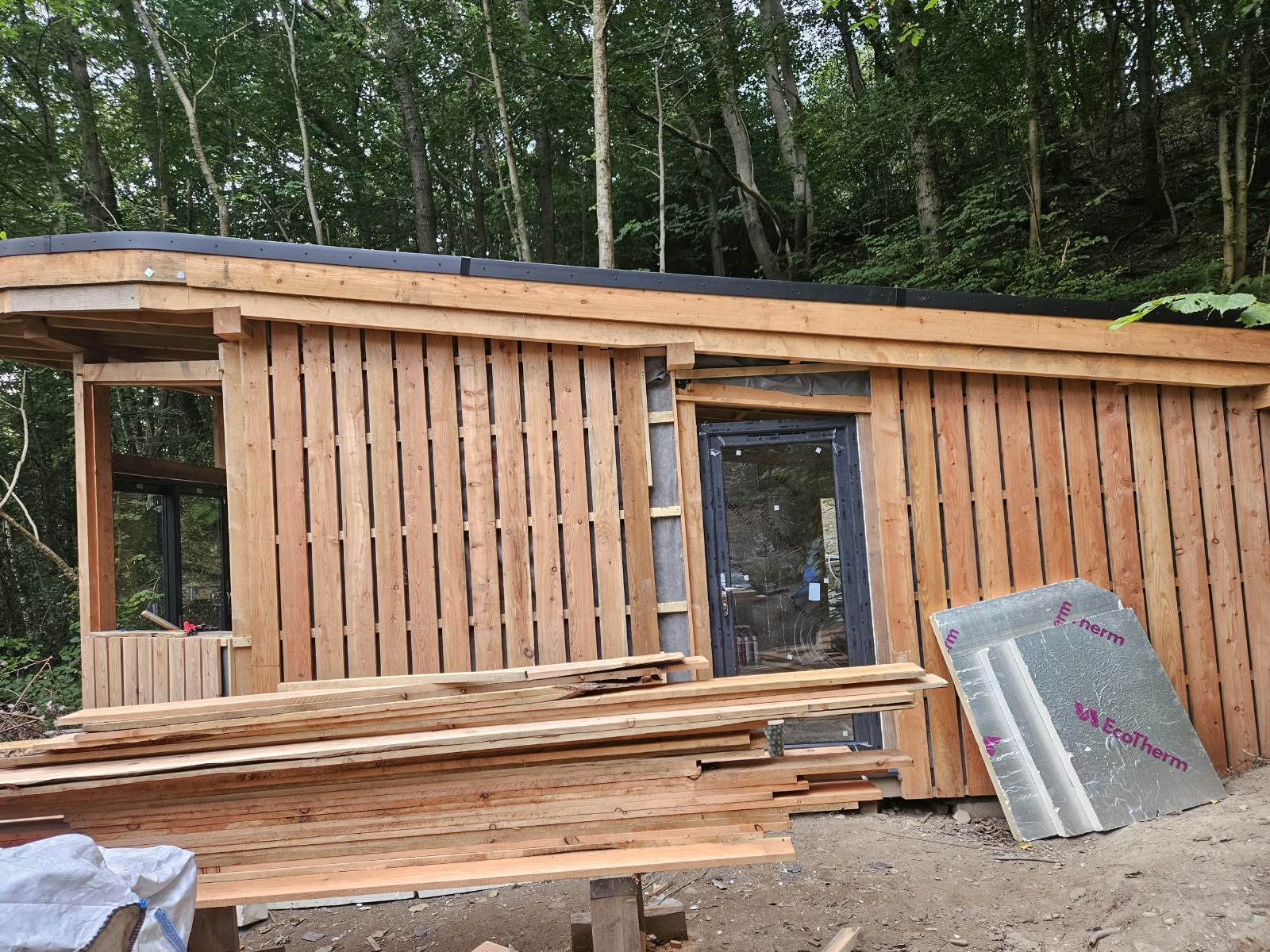
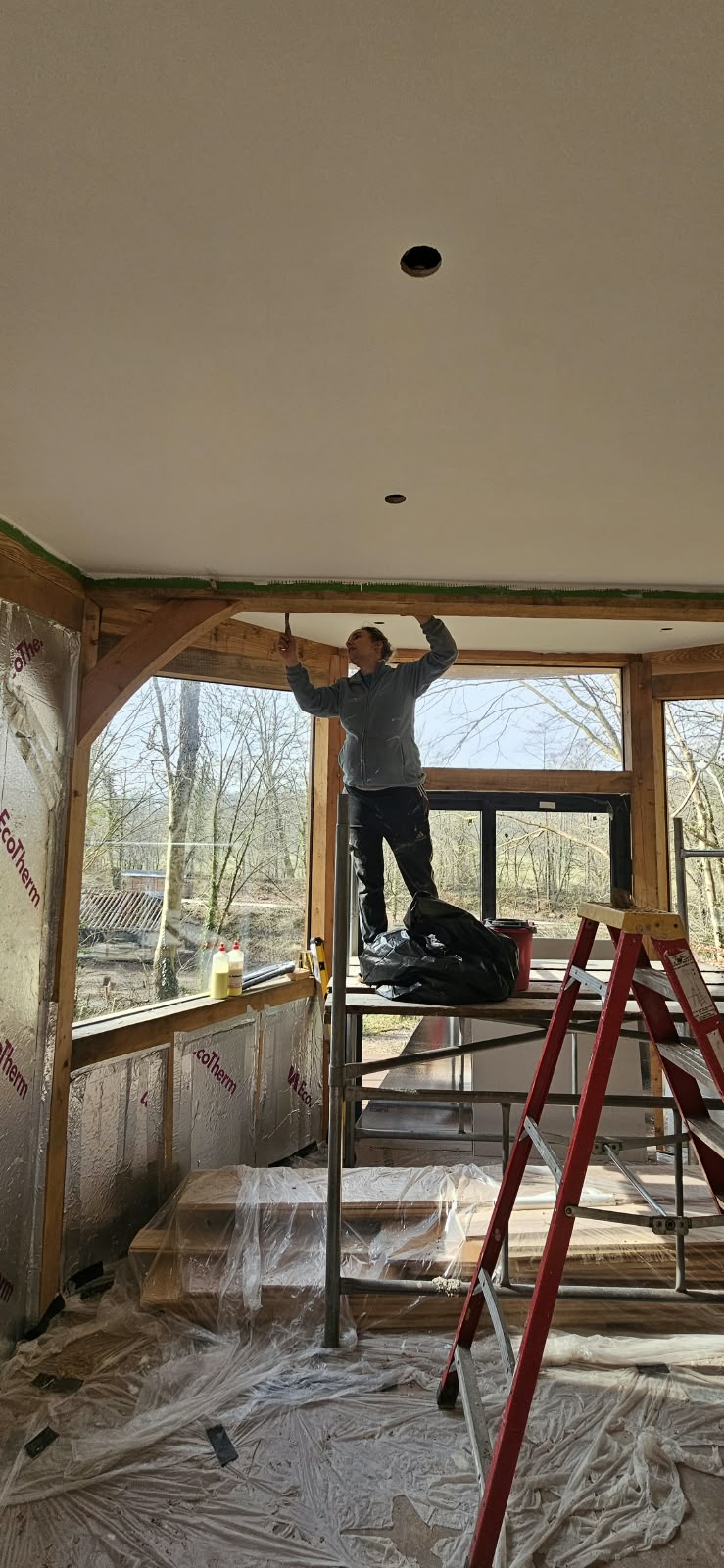
Dad could see I was struggling to get through everything, so he booked a week off work and came up to help. He took one look at the inside and suggested plasterboarding the ceiling and painting it white. We already had timber on the floor and the walls, and he thought it might all get a bit too woody in there. It was the best decision we made. The white ceiling makes the timber stand out, and I’m glad he could see that while I was still thinking about how much we had left to do.
Dad plastered the whole ceiling in two days. We got it painted and carried on with the walls while he was still up with us. I’d been looking at that list of jobs wondering how we were going to get through it all. Having Dad give up a week, Paddy turn up with the nail gun and my wife up there finishing the painting made a real difference. Bit by bit, we were getting close to being able to open the doors.