

Ash dieback is one of the most significant tree diseases the UK has faced in modern times. First confirmed in 2012, it has spread rapidly through woodlands, hedgerows and private land, affecting millions of ash trees. At first glance, it feels like nothing but a curse — a disease that weakens, kills and changes familiar landscapes. But as with many challenges in nature, its impact forces us to ask deeper questions about how we manage land, safety and legacy.
“Turning Loss into Legacy.”
Where Did Ash Dieback Come From?
Ash dieback is caused by the fungal pathogen Hymenoscyphus fraxineus. It originated in East Asia, where native ash species evolved alongside it and developed natural resistance. European ash did not. The disease is widely believed to have reached the UK through the importation of infected nursery stock, a consequence of global plant trade moving faster than natural ecosystems can adapt.
This is where the idea of curse begins to blur into lesson. Ash dieback has exposed the vulnerabilities created by widespread importation and exportation, reminding us that convenience can come at a long-term ecological cost.
How the Disease Spreads
The fungus spreads primarily through airborne spores released from infected leaf litter during the summer months. These spores can travel significant distances on the wind, meaning even well-managed or isolated woodlands are not immune. Human movement of infected plants and materials can also accelerate its spread.
Once inside the tree, the fungus disrupts water and nutrient transport. The tree begins to weaken from within — often long before outward symptoms become obvious.
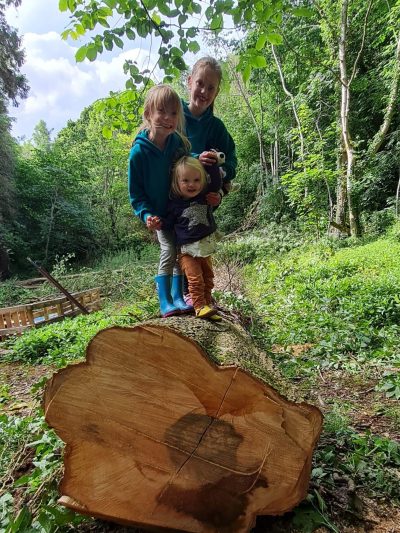
Girls standing on a large 60 year old felled Ash tree
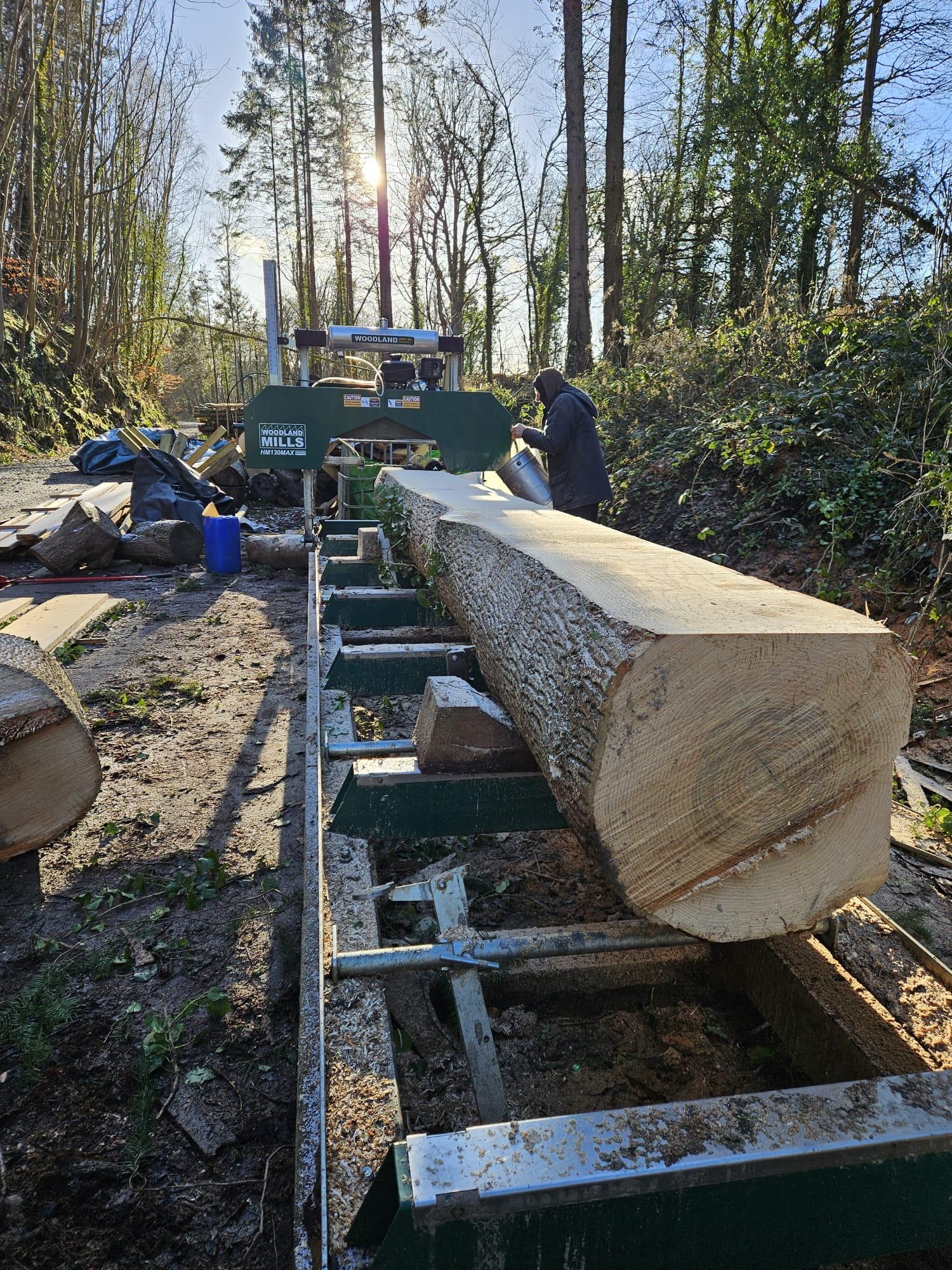
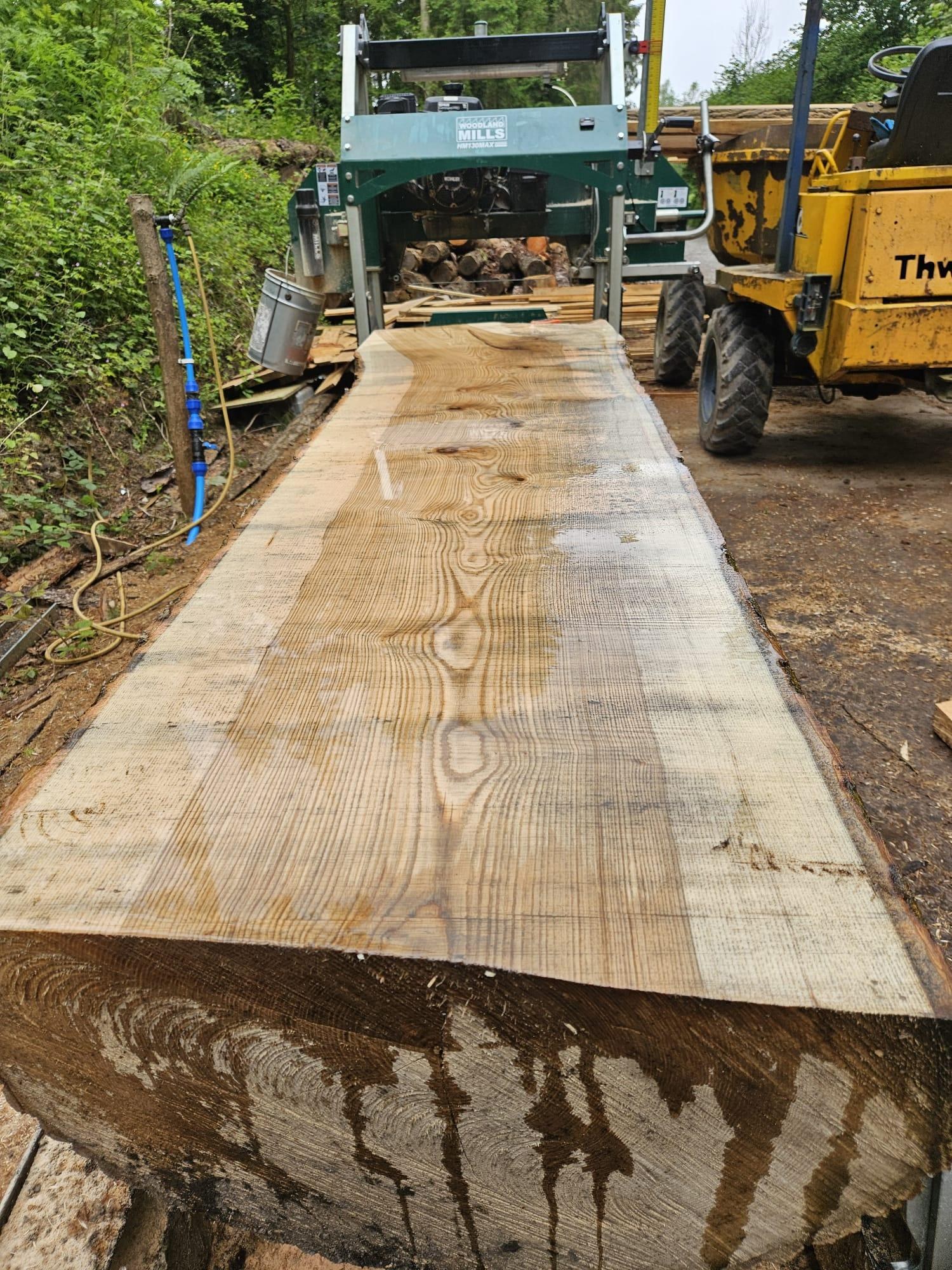
Milling Ash into floor boards and internal cladding
The Ash Trees’ Next Chapter
What Ash Dieback Does to the Tree
Infected ash trees suffer gradual decline. Leaves blacken and fall early, crowns thin, and branches die back over time. As the disease progresses, the timber becomes increasingly brittle. Large limbs can break out without warning, even on trees that still appear partially healthy.
This is where ash dieback moves from environmental issue to real-world risk.
Why Safety Management Becomes Essential
In woodlands where people walk, work or stay, brittle ash trees pose a serious danger. Falling branches — often called “widow-makers” — can cause injury or worse, with little or no warning.
In our woodland, ash forms a key part of the landscape. Monitoring over time has shown increasing structural weakness, making it clear that doing nothing would place people at risk. With heavy hearts but clear responsibility, we made the decision to remove the affected trees in areas accessible to visitors.
It feels like a loss — but safety must come first.
“Cutting ash is a beautiful experience. Shaping it in the workshop and sanding it until the grain reveals itself is both inspiring and deeply rewarding.”
Turning Loss into Legacy
Rather than viewing this as an ending, we chose to see it as transformation. The felled ash trees will be milled and machined on site, then used as internal cladding within our accommodation spaces.
In this way, the trees live on. Their grain, warmth and story remain visible — not hidden or discarded, but celebrated. Guests will quite literally be surrounded by the woodland that once stood outside their doors.
A Curse or a Blessing?
Ash dieback is undoubtedly tragic. But it has also forced better conversations, safer practices, more thoughtful woodland management and a deeper respect for resilience. It has reminded us that stewardship isn’t only about preservation — it’s about responsibility, adaptation and care.
We will replant when resistant strains of ash become available. Until then, we honour what was, protect those who visit, and carry the woodland forward in a new form.
Perhaps ash dieback is both curse and blessing — but it is how we respond that decides which it becomes.