

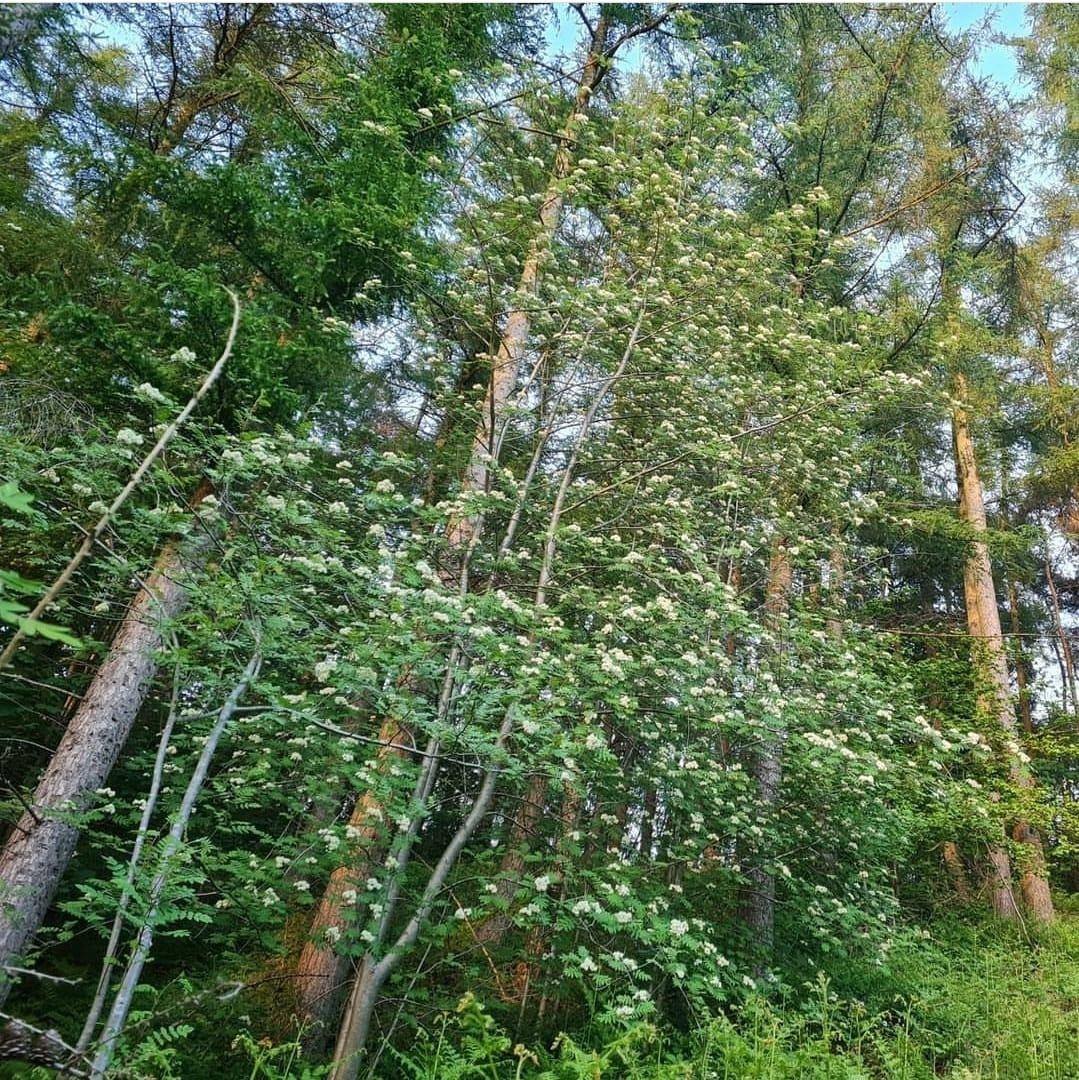
One of the things we love most about Tree Tops and Train Tracks is that the woodland isn’t simply the backdrop to what we do – it’s at the heart of almost everything. Behind our house sits a plantation of mature larch trees. These trees have been growing here for decades, long before Tree Tops and Train Tracks existed, and today they provide us with something incredibly valuable: a sustainable source of beautiful Welsh timber. But our aim isn’t to simply cut the trees down and start again. Instead, we’re gradually managing areas like this using a method known as Continuous Cover Forestry.
What is Continuous Cover Forestry?
Continuous Cover Forestry is actually quite a simple idea. Rather than clear-felling an entire area of woodland when the trees reach maturity, individual trees – or small groups of trees – are selectively removed over time. The woodland therefore remains a woodland.
By carefully thinning selected trees, more light reaches the woodland floor and gives younger trees and natural regeneration an opportunity to establish beneath the existing canopy. Over time, instead of having a plantation where every tree is roughly the same age and size, the aim is to develop a woodland containing trees of different ages, sizes and eventually a greater mixture of species.
"For us, that's a much more exciting future for the woodland."
From Larch Plantation to Future Woodland
The larch plantation behind our house is a great example. When plantations like this were originally established, the objective was largely timber production. Trees were planted relatively closely together, grown as a crop and would traditionally have been harvested once they reached maturity.
We’re taking a different approach.
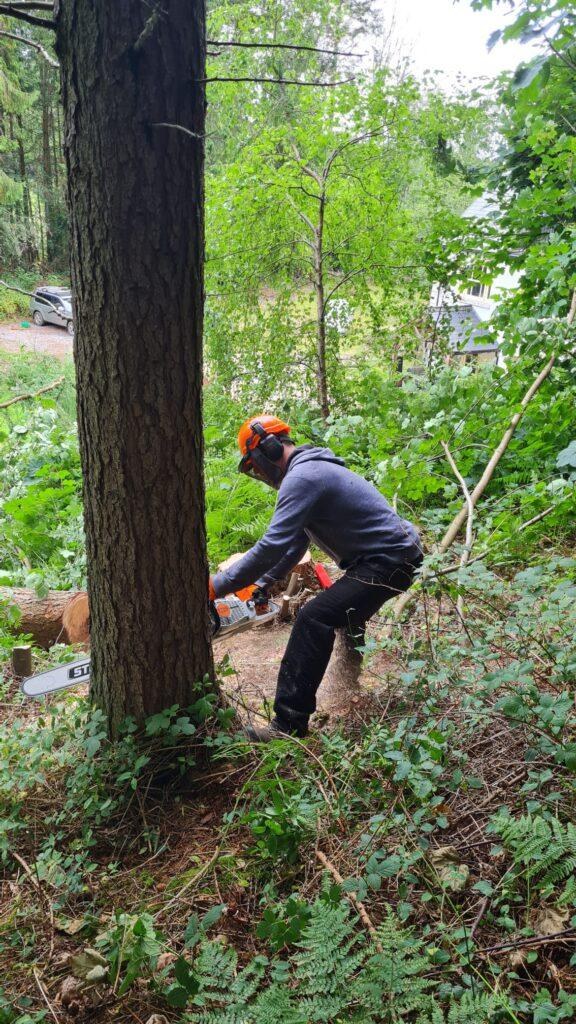
Rather than removing the plantation in one go, we’re gradually selecting trees for felling while retaining plenty of mature trees around them. Every tree removed creates a little more space. More sunlight reaches the ground. Existing trees have additional room to develop. Young trees have an opportunity to establish, and the structure of the woodland gradually begins to change. It’s not something that happens overnight.
In fact, that’s exactly the point.
We’re thinking about what this woodland could look like in 20, 50 or even 100 years’ time.
But We Still Want to Produce Timber
Sustainable woodland management doesn’t mean never cutting down a tree. Timber is an incredible renewable material – particularly when the tree has been grown, felled, milled and used locally. Our aim is to get as much value as possible from the trees we selectively remove.
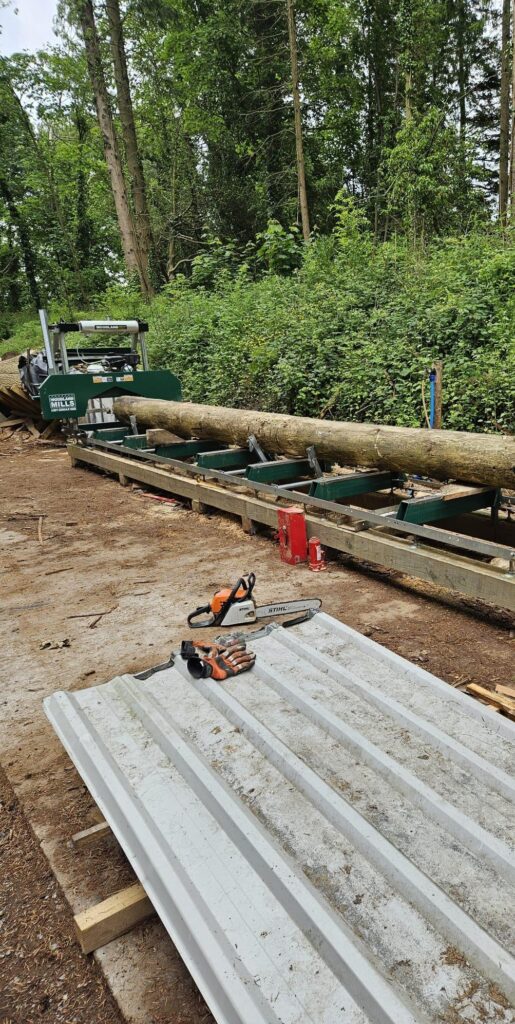
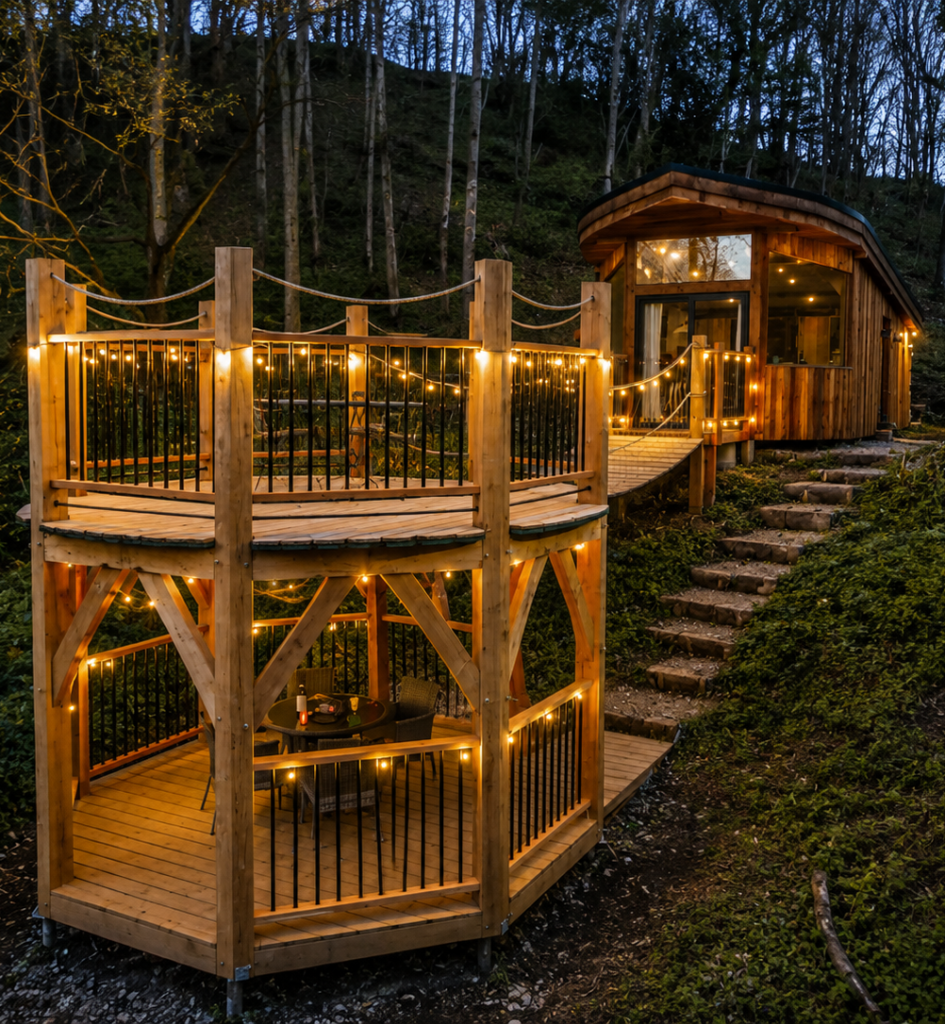
Some of the larger larch trees can be milled on our own sawmill into beams, cladding, boards and construction timber. And you can already see this timber throughout Tree Tops and Train Tracks. We’ve used timber grown within our own woodland in the buildings and structures around the site, including our glamping accommodation and other woodland projects.
There’s something very satisfying about standing inside a building and being able to point through the window towards the woodland and say:
"That's where the timber came from."
Using the Whole Tree
Another important part of our approach is trying not to waste what we harvest. The best sections of a tree can become construction timber, beams or boards. Smaller sections can have other uses around the woodland, while material that isn’t suitable for milling can still become firewood or fuel.
Even sawmill waste and offcuts have a use. It’s about looking at a tree as a valuable resource and finding the best possible use for each part of it.
Forestry and Wildlife Can Work Together
Producing timber and looking after wildlife don’t have to be opposing ideas. Careful thinning can create different levels of light throughout a woodland, encouraging ground vegetation and natural regeneration while retaining the protection of the surrounding tree canopy. Deadwood can also be deliberately retained where appropriate, providing valuable habitat for insects, fungi and countless other woodland organisms.
Instead of creating one uniform plantation, our long-term aim is a more varied woodland containing mature trees, younger trees, regeneration, open areas and deadwood. That diversity is good for wildlife – but it can also make the woodland more resilient.
A Woodland That Pays for Its Own Future
There is another important side to sustainable forestry that sometimes gets overlooked. Woodland management costs money. Trees need managing, paths need maintaining, machinery is required and new woodland projects need funding.
Producing useful timber from carefully selected trees gives the woodland an economic value without needing to clear-fell it. The timber can then be used to build things here at Tree Tops and Train Tracks, sold for other projects or turned into higher-value products. That income can ultimately be reinvested back into managing the woodland. For us, that’s what sustainability really means. Not simply leaving the woodland untouched, but creating a system where forestry, timber, wildlife and people can support one another.
From Tree to Timber – Without Leaving Tree Tops and Train Tracks
Perhaps our favourite part of the whole process is how short the journey can be. A tree can grow in our woodland for decades. When the time is right, we selectively fell it. We extract it from the woodland. We mill it on our own sawmill. We dry and machine the timber. And eventually that same tree might become cladding, flooring, furniture or part of another timber-framed building here at Tree Tops and Train Tracks. It doesn’t get much more local than that.
Looking After the Woodland for the Next Generation
We know we’ll never see the finished result, and we quite like that. Woodland management forces you to think on a completely different timescale. Some of the decisions we’re making today will hopefully still be influencing this woodland long after we’re gone.
Our goal is to leave behind a woodland that is more diverse, more resilient and still capable of producing fantastic Welsh timber – while remaining an incredible habitat for wildlife and a beautiful place for people to experience.
That’s the bigger story behind Tree Tops and Train Tracks. The camping, tree tents, cabin, timber framing courses and timber projects might all look like separate parts of what we do. But ultimately, they all start in exactly the same place.
The woodland.