There’s something rather wonderful about the idea of cutting down a tree, only to discover that you haven’t really cut it down at all. In fact, you’ve given it the opportunity to grow again. Not just as one tree, but as several new stems growing from the very same root system.
It’s a traditional woodland management technique called coppicing, and it’s something we’re incredibly excited to be bringing into our woodland here at Tree Tops and Train Tracks.
Because what if we could produce the firewood we need, year after year, without having to continually plant new trees or clear large areas of woodland? What if the woodland itself could provide a renewable supply of fuel for generations? Well, that’s exactly what we’re setting out to achieve by coppicing for firewood along our old railway track.
"The wonderful thing about coppicing is that the end of one harvest is simply the beginning of the next."
A Thousand Metres of Woodland Opportunity
Running through Tree Tops and Train Tracks is our old railway track, stretching approximately 1,000 metres through the woodland. It’s one of the features that makes our little corner of North Wales so special. And we’ve been thinking about how we can manage the hardwood trees growing alongside it in a way that benefits both the woodland and the future of our business.
Our plan is relatively simple. Every year, we’ll coppice approximately 50 metres of suitable hardwood woodland along the track. Then, the following year, we’ll move on to the next 50 metres. And the year after that, another 50 metres. Rather than harvesting everything in one go, we’ll gradually work our way along the railway track, allowing the areas behind us to regenerate naturally.
With approximately 1,000 metres to manage, that’s a complete rotation of around 20 years. By the time we’ve worked our way to the end and returned to the first section, the original coppiced trees will have had almost two decades to regrow. And then the whole process begins again. It’s a long-term approach, but when you’re managing woodland, thinking in decades rather than months is all part of the adventure.
Our 20-Year Coppice Rotation
Our 1,000-metre railway track, divided into twenty 50-metre sections. One section is coppiced each year.
0 mRailway track1,000 m
Year 10–50 m
Year 250–100 m
Year 3100–150 m
Year 4150–200 m
Year 5200–250 m
Year 6250–300 m
Year 7300–350 m
Year 8350–400 m
Year 9400–450 m
Year 10450–500 m
Year 11500–550 m
Year 12550–600 m
Year 13600–650 m
Year 14650–700 m
Year 15700–750 m
Year 16750–800 m
Year 17800–850 m
Year 18850–900 m
Year 19900–950 m
Year 20950–1000 m
Year 21: return to the first section, subject to suitable regrowth, woodland condition and the management plan.
Working our way along the old railway track.
One Tree Becomes Many
So, how does coppicing actually work? Unlike conventional tree felling, where a tree is removed and the stump may eventually die or decay, coppicing relies on the remarkable ability of certain hardwood species to regenerate from their existing root systems.
A suitable tree is carefully cut close to ground level, leaving behind what’s known as a coppice stool. Rather than growing back as one single trunk, the stool produces several new shoots. Over the following years, those shoots develop into multiple stems, drawing on the established root system beneath the ground.
PHOTO NEEDED
Coppice detail: a close-up of an established coppice stool with several stems growing from one base.
Depending on the species, growing conditions and management, those stems can eventually become a valuable source of firewood, poles and other useful woodland materials. And because the roots remain alive, the same stool can be harvested repeatedly over many rotations. Some traditionally managed coppice stools have survived for centuries. It’s a wonderfully simple example of working with nature rather than constantly starting again.
"One established root system. Multiple new stems. A renewable harvest that can continue for generations."
Why We’re Choosing a 20-Year Rotation
Different types of coppice woodland can be managed on very different timescales. Some species are harvested relatively frequently for smaller poles and traditional woodland products. Others are left to grow much longer, producing larger stems suitable for firewood.
For us, coppicing for firewood is about creating a reliable supply of hardwood logs that can be processed, dried and used throughout Tree Tops and Train Tracks. That’s why we’re planning a rotation of approximately 20 years. By dividing our 1,000-metre railway corridor into 50-metre sections, we can manage a small area each year while allowing the rest of the woodland to continue growing.
Each year’s carefully selected harvest can contribute to our firewood supply while the previously coppiced sections begin their next cycle of growth. Over time, we’ll have sections of woodland at different stages of regeneration, from newly coppiced stools to mature stems approaching their next harvest. It’s a living, growing cycle. And one we hope will continue long after we’re gone.
From Woodland to Warmth
One of the things we love most about running Tree Tops and Train Tracks is being able to use the resources growing right here on our land. And firewood is a perfect example. Throughout the year, we need logs for all sorts of things.
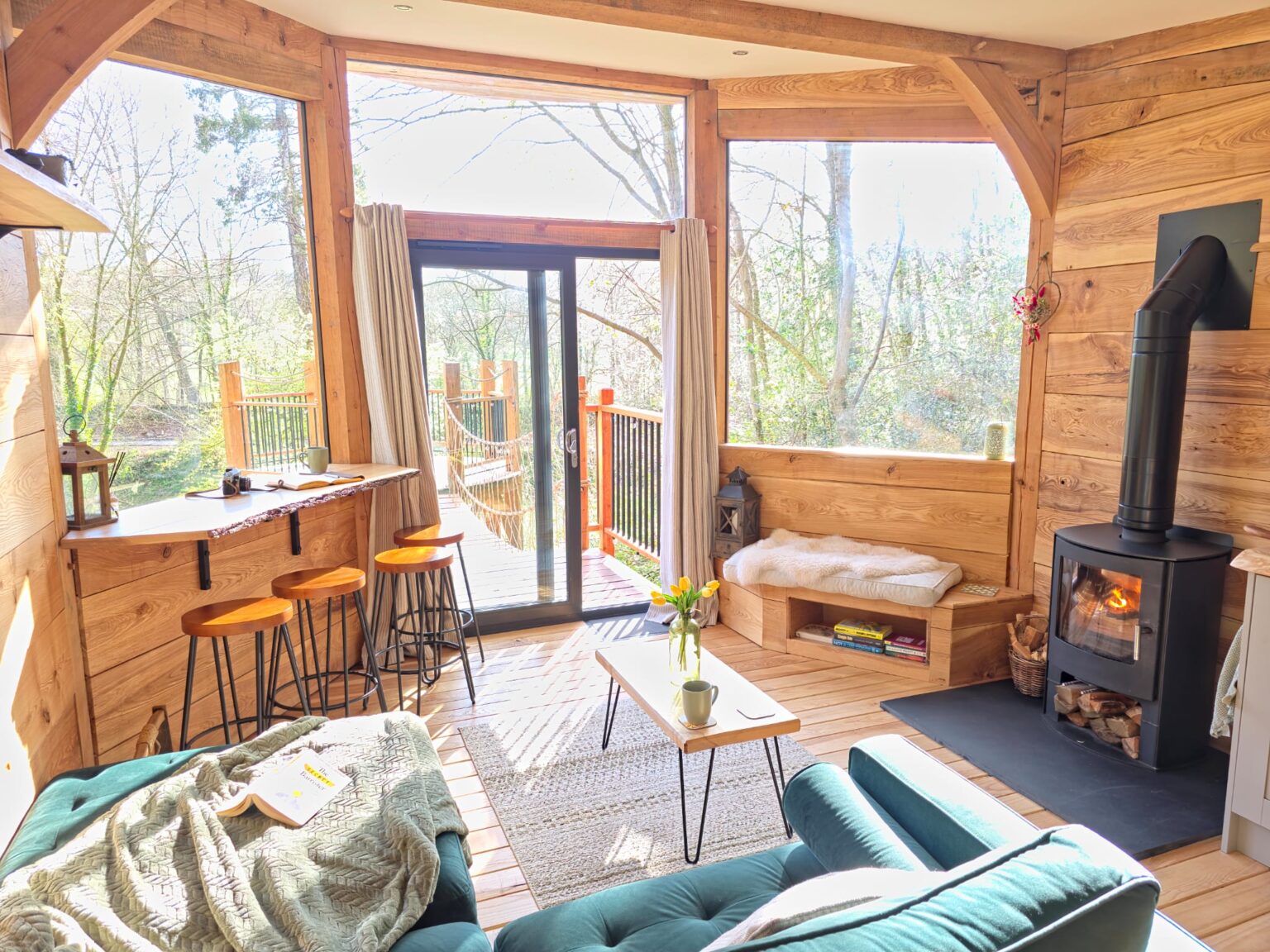
The Toad Hideout’s wood-burning stove keeps the handcrafted cabin cosy during colder months.
The Toad Hideout’s wood-burning stove.
Our outdoor pizza oven is another place where locally produced firewood can be put to good use. And no woodland camping adventure would be quite the same without a campfire: families roasting marshmallows, couples enjoying a peaceful evening and friends sharing stories beneath the trees.
Our woodland pizza oven.
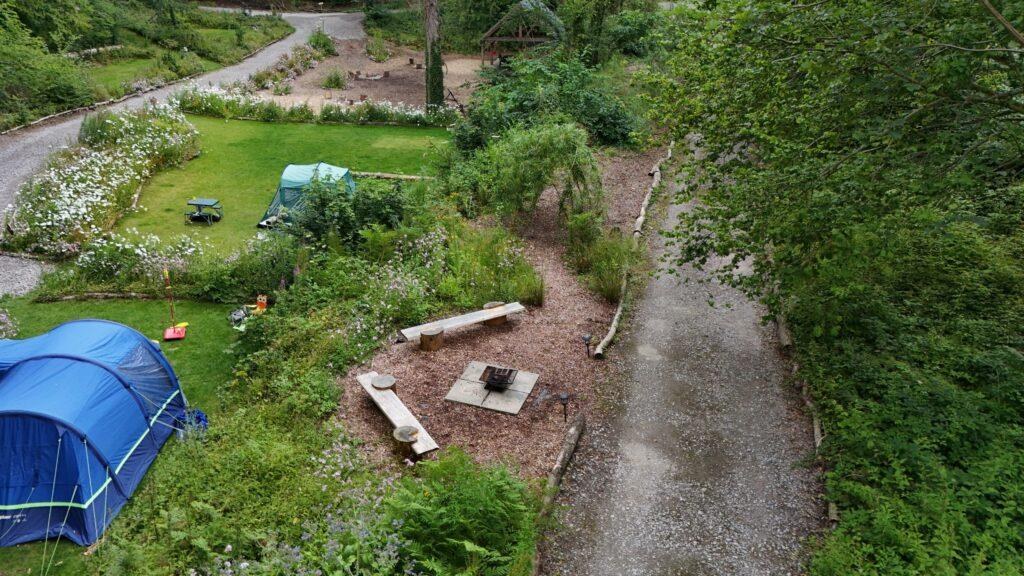
One of our designated campsite firepits.
Coppiced hardwood may also supply fuel and materials for future woodland projects. We want to make the best possible use of what the woodland produces, rather than allowing valuable material to go to waste.
"From the trees beside our railway track to the warmth of a campfire — we love the idea of our woodland providing for the people who come to enjoy it."
Coppicing Isn’t Just About Firewood
Although producing our own firewood is one of the main reasons behind this project, there are other potential benefits too. Woodlands that are never thinned or managed can sometimes develop dense, heavily shaded areas where relatively little light reaches the ground.
By carefully coppicing selected sections, we can temporarily open parts of the canopy and allow more sunlight to reach the woodland floor. That additional light can encourage woodland flowers, grasses, shrubs and young trees, depending on the existing vegetation and conditions. As the coppiced stems grow back, the amount of light gradually changes again.
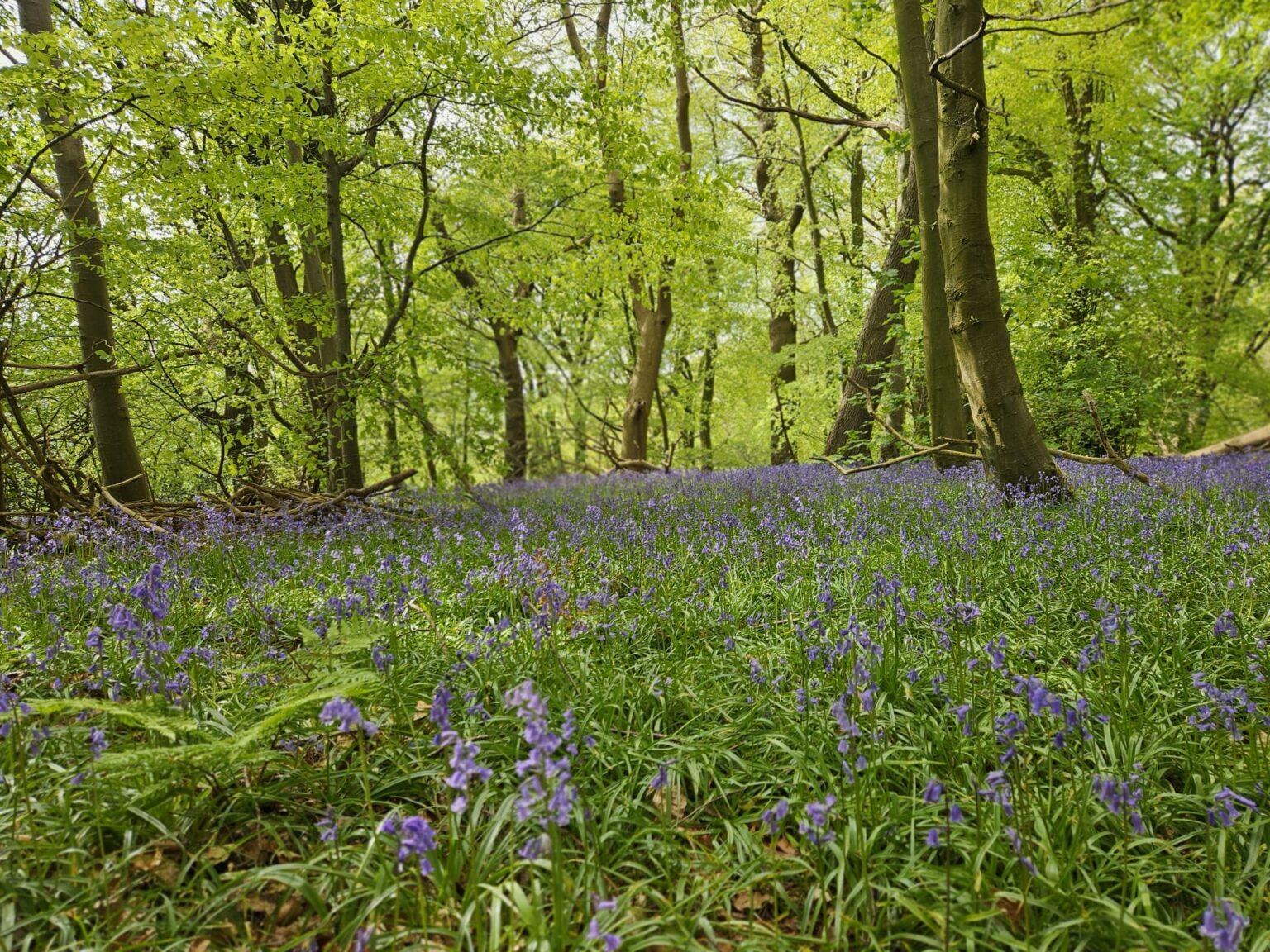
Bluebells on our woodland floor in spring.
And because we’re working on different sections each year, the woodland can develop a mixture of younger regrowth, older trees and more mature coppice. This variety of woodland structure can provide opportunities for different plants, insects, birds and other wildlife.
Of course, it isn’t simply a case of cutting everything down and expecting wildlife to benefit. We’ll need to choose suitable trees, retain important habitat features, protect regrowth from browsing animals where necessary and make sure our work is appropriate for the woodland. But managed carefully, coppicing can be a fantastic way to combine practical timber production with long-term woodland conservation.
A Woodland That Can Keep Providing
There’s a bigger idea behind all of this. We want Tree Tops and Train Tracks to become a place where the woodland isn’t simply something we look after, but something we work alongside. Our trees already provide us with beautiful timber for buildings, shelter for wildlife, shade in the summer and an incredible environment for our guests to enjoy.
Now we’re looking at how they can provide a more consistent supply of renewable firewood too. Rather than buying in all the logs we need, our long-term ambition is to produce more of that fuel ourselves. Harvest it responsibly. Process it. Season it properly. And use it right here in the woodland.
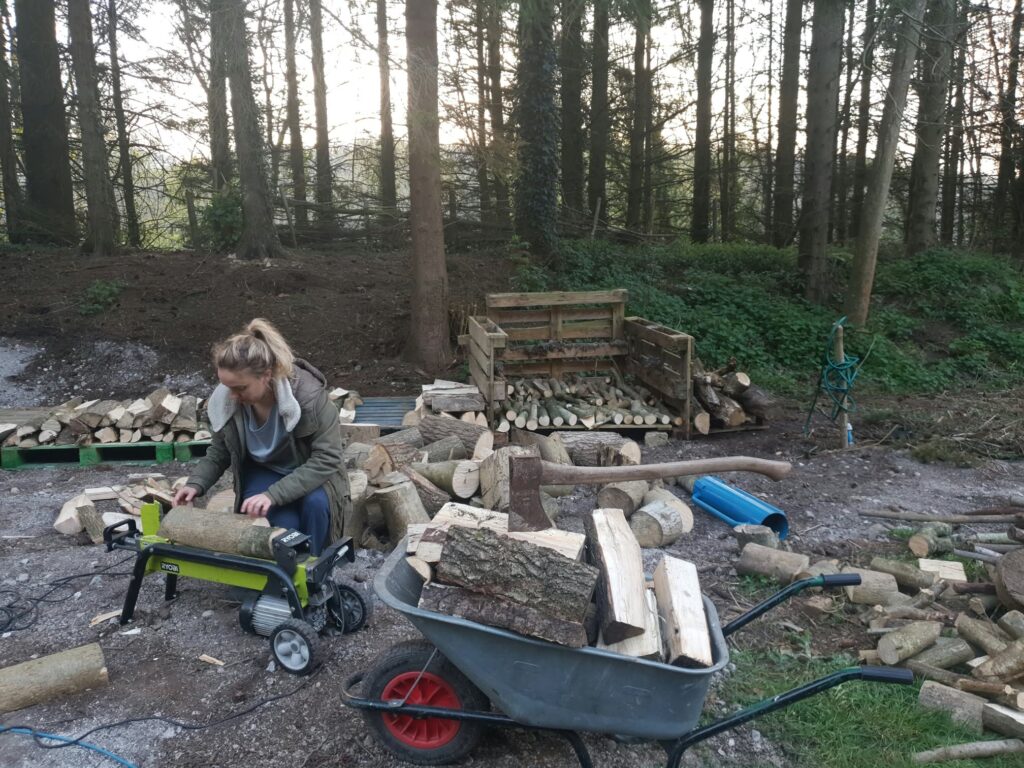
Splitting the logs.
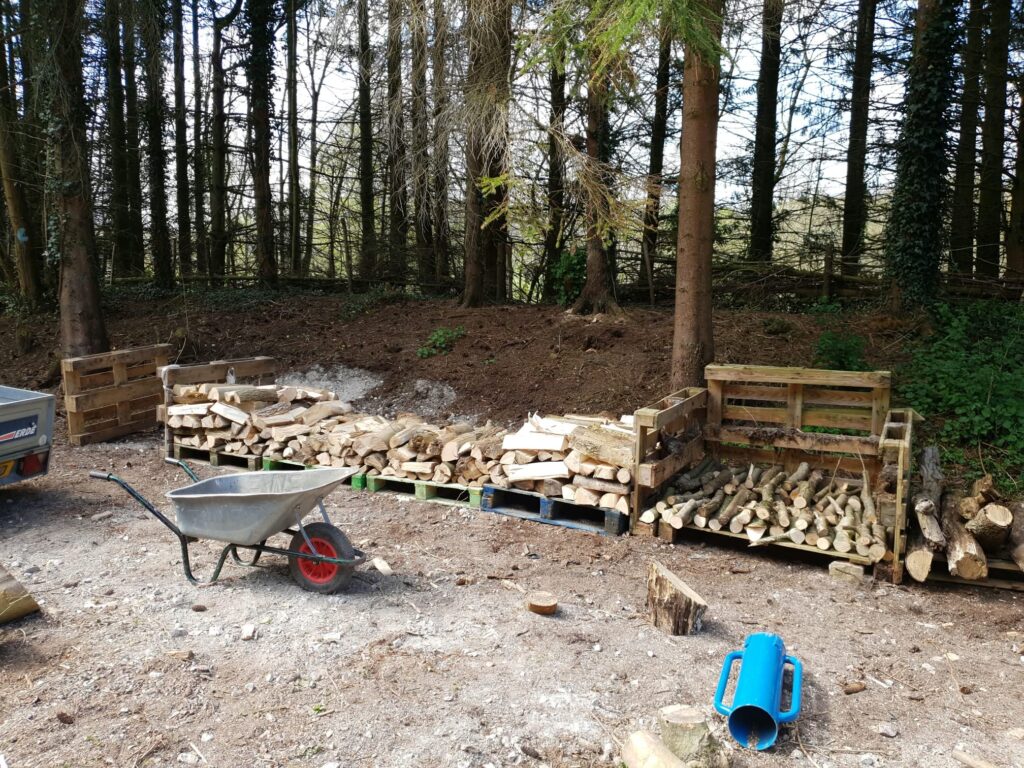
Seasoning properly takes time.
It’s about reducing unnecessary transport, making better use of our natural resources and creating a system that can support itself over time.
Thinking Twenty Years Ahead
Perhaps the most exciting thing about our coppicing project is that we’re only just beginning. The first 50 metres will be harvested. Then the next. And the next. Year by year, we’ll gradually work our way down the railway track. Behind us, the newly coppiced stools will be sending up fresh shoots, growing stronger and preparing for a future harvest.
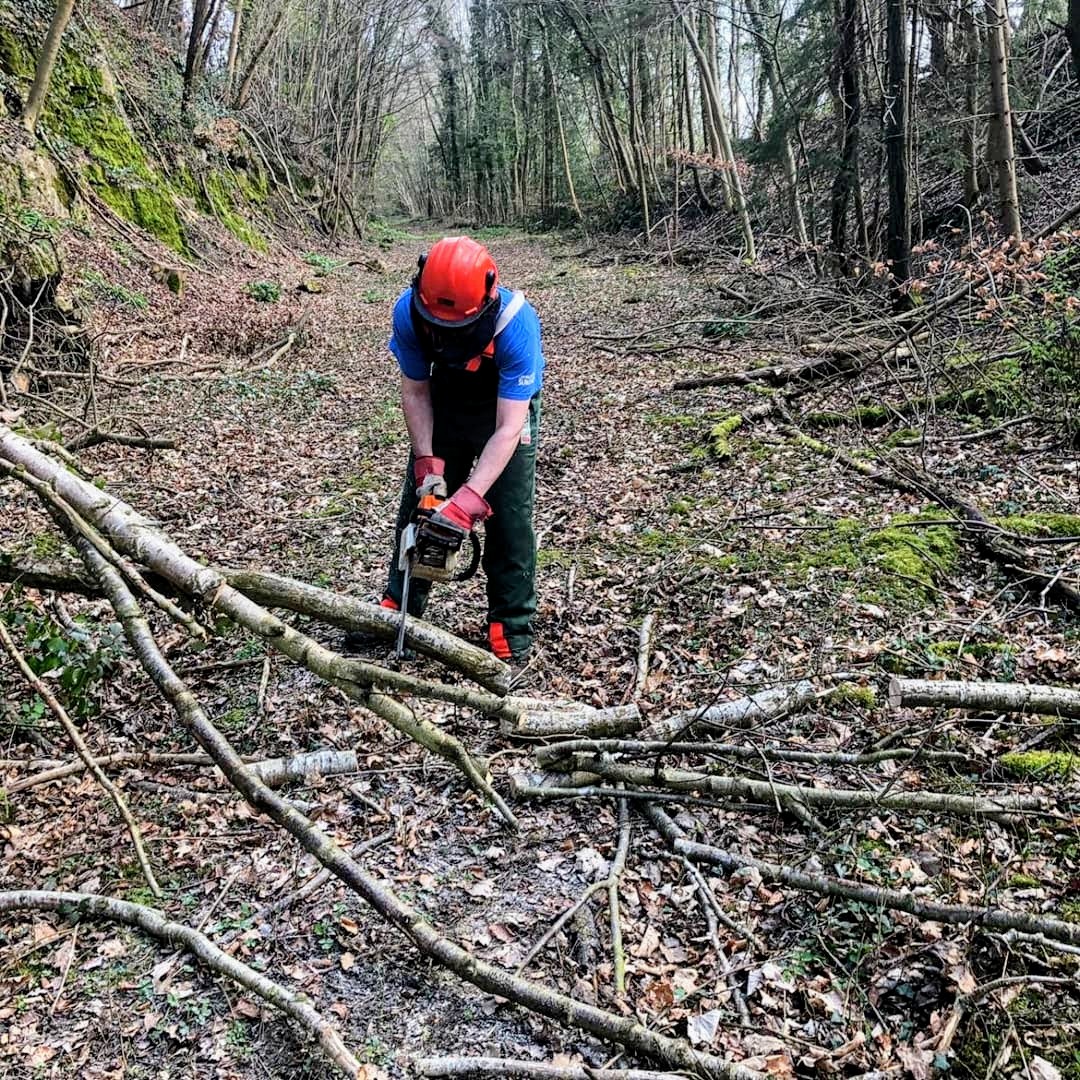
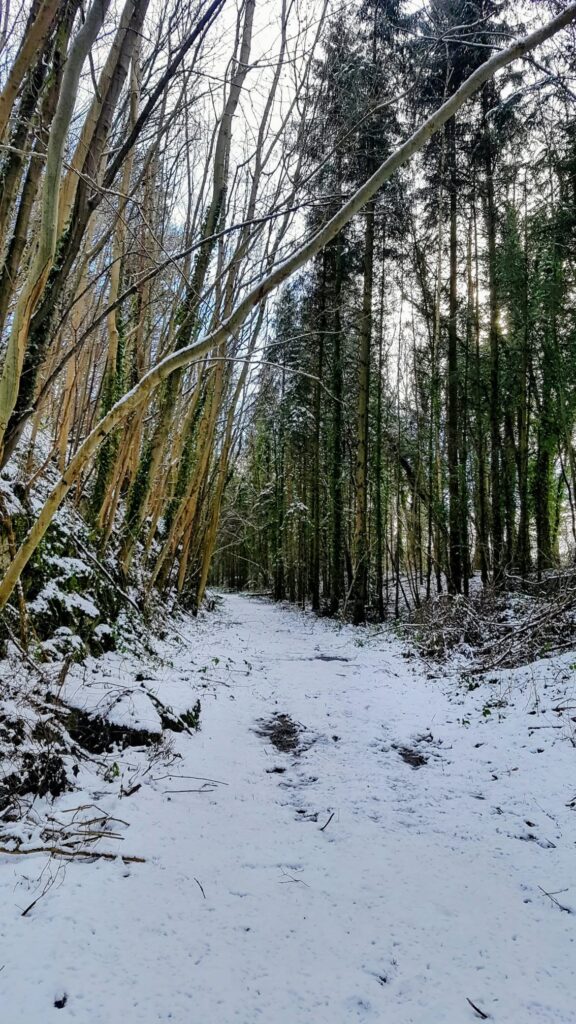
Before: the first section of track, ahead of the first cut.
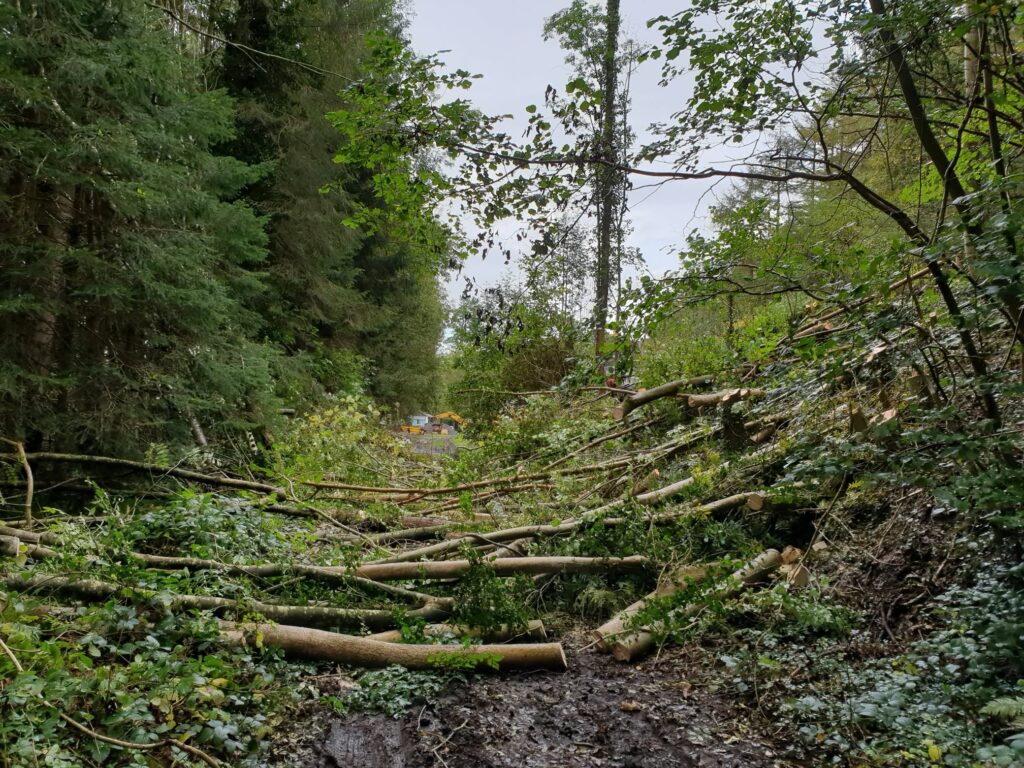
After: the first harvest, with the stems ready to process.
Some of those first tiny shoots will become substantial hardwood stems. And eventually, around two decades from now, we’ll arrive back where we started. Only this time, instead of beginning with mature single-stem trees, we’ll be harvesting timber that has grown as part of a deliberately managed coppice cycle.
There’s something rather special about that. We’re making decisions today that we hope will still be benefiting the woodland, our family and the people who visit Tree Tops and Train Tracks many years into the future. And that’s one of the things we love most about forestry. You never really finish. You simply become part of a much longer story.
"We’re not just growing firewood for next winter. We’re growing a woodland that can keep providing for the next generation."
Follow Our Coppicing Journey
Over the coming years, we’ll be sharing photographs and updates as our coppicing project develops. From the first 50 metres of harvested woodland to the new shoots appearing in spring, we’re looking forward to documenting how the railway corridor changes.
And if you come to stay at Tree Tops and Train Tracks, you might even find yourself sitting beside a campfire fuelled by the very trees you’ve been walking past. That’s a pretty lovely thought.
Because for us, sustainable woodland management isn’t just about what we take from the woodland. It’s about what we leave growing for the future. And sometimes, the best way to help a woodland grow is to give it the opportunity to begin again.
With love from the Tree Tops and Train Tracks family.
If you’d like to see the woodland for yourself, you’ll find all of our camping and glamping stays here.

 ,

